
 by Balaji Nursery Editorial Team
Loose Natural Grass vs Grass Rolls: Which to Buy?
Loose Natural Grass vs Grass Rolls: Which Should You Buy?
Every lawn project hits the same fork in the road. Do you buy loose natural grass and plant it piece by piece, or order grass rolls and get a green lawn in a day?
Both give you real, living natural grass. The difference is in price, speed, effort, and how the lawn looks in its first three months. Choose wrong and you either overspend on a lawn that didn’t need to be instant, or wait through a patchy, weedy summer when you needed a finished lawn for an event.
This guide compares the two side by side so you can decide with real numbers.
What is loose natural grass?
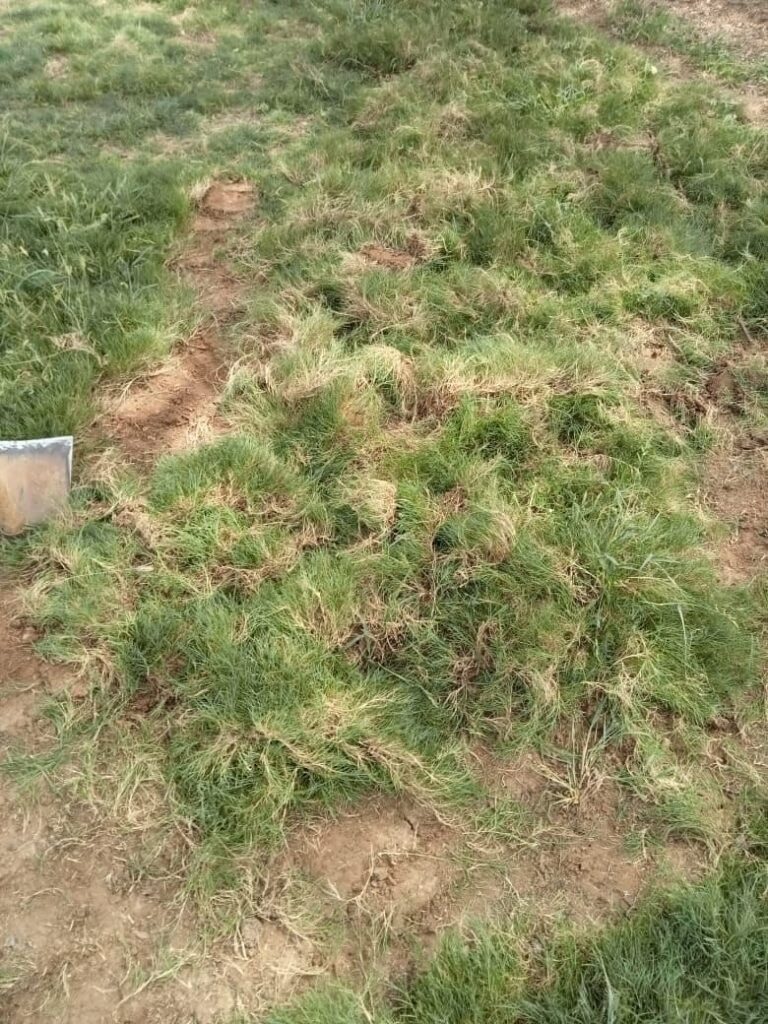
Loose natural grass is live grass sold in loose form: small clumps, runners, and rooted pieces rather than a rolled strip of turf with soil attached. You plant it by hand using a method called dibbling. You make small holes in prepared soil, press a piece of grass into each one, and firm the soil around it.
Over the next weeks, the pieces send out new runners (stolons) and knit together into a continuous lawn. This works best with spreading grasses like Bermuda (Doob) and Selection No. 1, which creep across bare ground on their own.
What are grass rolls?
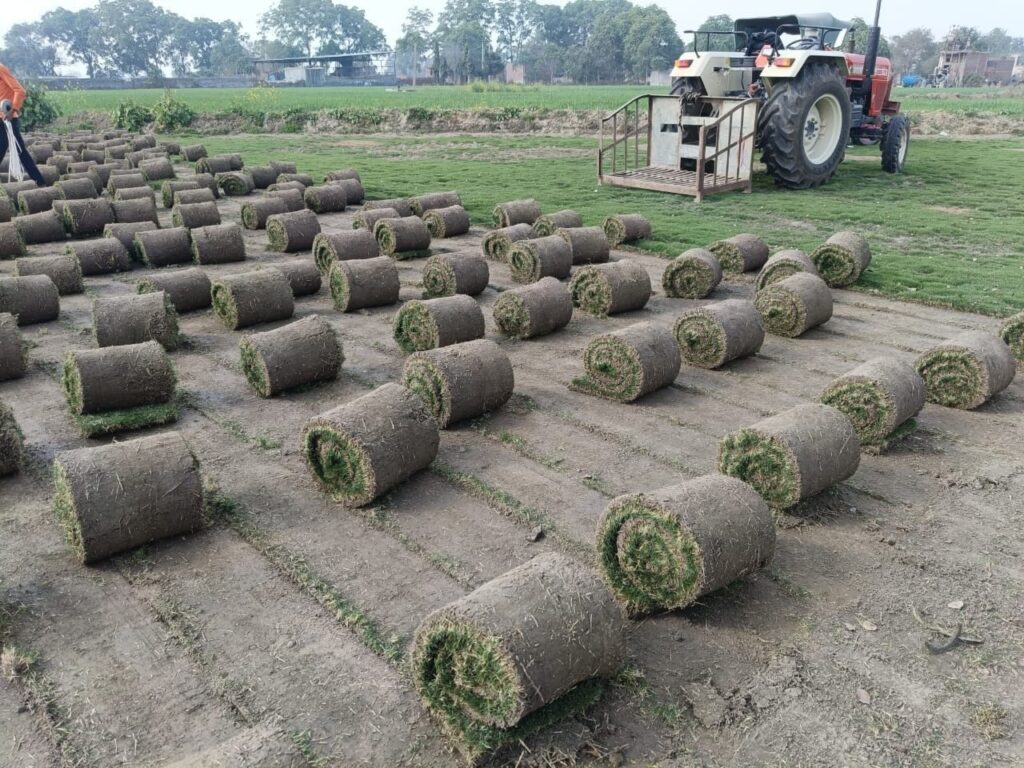
Grass rolls are strips of established turf, cut with a layer of soil and roots and rolled up for transport. You unroll them on prepared soil like a carpet, butt the edges together, and water. The lawn looks complete from day one, and roots knit into the soil over the next 2 to 4 weeks.
Rolls are available in Selection No. 1, Bermuda, and Korean grass (Zoysia), and cost more per square foot because the grower has already done the growing for you.
How do loose grass and grass rolls compare?
Cost. Loose grass is the cheaper option on material because you buy grass for planting points, not full coverage. Rolls cost Rs 3 per sq ft for Selection No. 1, Rs 4 for Bermuda, and Rs 10 for Korean grass, and every square foot is covered the day it is laid. Get a current quote for loose grass at Balaji Nursery, since quantity depends on your spacing.
Speed to a full lawn. Rolls: instant. Loose grass: 6 to 10 weeks in warm weather with regular watering, and longer in cool months because Bermuda grows slowly below 20°C.
Effort and labour. Rolls need soil levelling, laying, and trimming at edges. Loose grass needs the same soil prep plus hundreds of individual planting holes, then weeding while the lawn fills in. Dibbling a 1,000 sq ft lawn is a full day of work for a small team.
Weed pressure. Bare soil between loose plants is an open invitation for weeds. Expect to hand-weed every week or two until the grass closes the gaps. Rolls leave no bare soil, so weeds have very little room.
Erosion and rain. On slopes and during heavy rain, bare soil between loose pieces can wash out. Rolls hold soil immediately. If you are laying an embankment or a drainage-prone plot, rolls are the safer pick.
Evenness. Rolls give a uniform surface straight away. Loose grass fills unevenly: patches near the water source close first, and shaded or dry corners lag behind.
Planting window. Loose grass is more forgiving of timing in warm months because each piece roots on its own. Rolls dry out within hours in peak summer and should be laid soon after delivery.
When should you buy loose natural grass?
Loose grass makes sense in these situations:
Large areas on a tight budget. Farmhouses, school grounds, plots and big gardens where covering every square foot with rolls would cost too much.
No deadline. You can wait two to three months for the lawn to fill in and you don’t need it ready for an event.
Filling patches in an existing lawn. Small bare spots in a Bermuda or Selection No. 1 lawn can be repaired by dibbling loose grass into the gap. It blends with the surrounding grass as it spreads.
Warm season planting. March to September in most of India, with daily watering for the first two weeks, gives loose grass the heat it needs to spread fast.
When should you buy grass rolls?
Rolls are the better choice in these situations:
You want a finished lawn now. Homes, villas, weddings, events, property handovers, and anything with a date attached.
Slopes or rain-prone sites. Rolls lock the soil in place from day one.
Premium grasses. Korean grass spreads slowly, so rolls are the practical way to get a Zoysia lawn.
Low maintenance start. Fewer weeds, less patch repair, and less daily attention in the first month.
Small and medium lawns. On a 500 to 1,500 sq ft home lawn, the extra cost of rolls is often a few thousand rupees. Many homeowners find that price worth the instant result.
What does each option cost for a 1,000 sq ft lawn?
Soil preparation is the same for both: vermicompost at Rs 960 per 50 kg bag, roughly 4 bags, comes to Rs 3,840.
Selection No. 1 rolls: Turf: Rs 3,000. Soil prep: Rs 3,840. Laying labour: Rs 2,000 to Rs 3,000. Total installed: roughly Rs 8,840 to Rs 9,840.
Bermuda rolls: Turf: Rs 4,000. Same soil prep and labour. Total installed: roughly Rs 9,840 to Rs 10,840.
Korean grass rolls: Turf: Rs 10,000. Same soil prep and labour. Total installed: roughly Rs 15,840 to Rs 16,840.
Loose natural grass: Grass: Rs 2/sqft. Same soil prep: Rs 3,840. Planting labour: more hours than laying rolls, so budget extra for dibbling and a month of weeding.
The roll prices above are for the grass only. The real saving with loose grass is on material, and part of it is given back in labour and weeding time.
How do you plant loose natural grass?
Step 1: Prepare the soil. Loosen the top 15 to 20 cm, mix in vermicompost or FYM at 4 to 5 kg per square metre, and level the surface. Good preparation matters even more for loose grass because every piece must root in the soil itself. The soil treatment guide covers testing and fixing any soil type.
Step 2: Water the bed. Wet the soil the day before so planting holes hold their shape.
Step 3: Dibble the grass. Make holes 2 to 3 cm deep, spaced 10 to 15 cm apart (closer spacing fills faster). Press one piece of grass into each hole with at least one node below the surface and firm the soil around it.
Step 4: Water daily. Keep the soil moist, not flooded, for the first 2 to 3 weeks. Reduce to every 2 to 3 days once new runners appear.
Step 5: Weed and feed. Hand weed every week or two. Apply a light dose of organic manure after 4 weeks to push runner growth. Mow lightly once the grass reaches 5 to 7 cm.
For laying rolls, the step-by-step lawn installation guide walks through both methods.
Which grass types come in loose form?
Spreading grasses suit loose planting best. Bermuda (Doob) and Selection No. 1 creep quickly and close gaps without help, so they are the usual choice for dibbling. Korean grass (Zoysia) also spreads, but slowly, so a loose-planted Zoysia lawn can take a full season to fill in. Not sure which variety suits your climate? The regional grass guide compares them across Indian zones.
Common mistakes when choosing between loose grass and rolls
Choosing on price alone. The cheaper material can cost you weeks of weeding. Count your time too.
Planting too far apart. Spacing wider than 15 cm leaves gaps that take months to close and let weeds in.
Letting loose grass dry out. Loose pieces have almost no soil attached, so they dry out faster than rolls. Water daily in the first fortnight.
Skipping soil preparation. Neither option rescues poor soil. Roots need loose, fertile ground to establish.
Laying rolls late. Rolls that sit rolled up for more than 48 hours in summer heat start to cook from the inside. Plan the soil bed before the turf arrives.
So, which should you buy?
Buy grass rolls if you want an instant lawn, have slopes or heavy rain to deal with, or plan to use the lawn within weeks. Buy loose natural grass if you have a big area, a tight budget, and time to wait for it to fill in.
Many customers combine both: rolls on the front lawn that guests see, loose grass on the larger back garden or farm area.
Want a quote for loose grass or grass rolls?
Balaji Nursery supplies Selection No. 1 rolls at Rs 3 per sq ft, Bermuda at Rs 4 per sq ft, and Korean grass at Rs 10 per sq ft, along with loose natural grass for dibbling, organic manure, and gardening seeds.
Call 8766234417 or 9354173113. Share your lawn area, city, and timeline. The team will recommend loose grass or rolls, calculate the quantity, and give you a free quote.
Last Updated on 34 minutes ago by Balaji Nursery Editorial Team

- Loose Natural Grass vs Grass Rolls: Which to Buy? - November 2, 2026
- Complete Garden Contracting Services | From Empty Plot to Green Paradise - October 30, 2026
- Which lawn grass grows best in Telangana’s hot climate? - October 27, 2026