A practical, no-nonsense guide to choosing the right lawn grass for your location
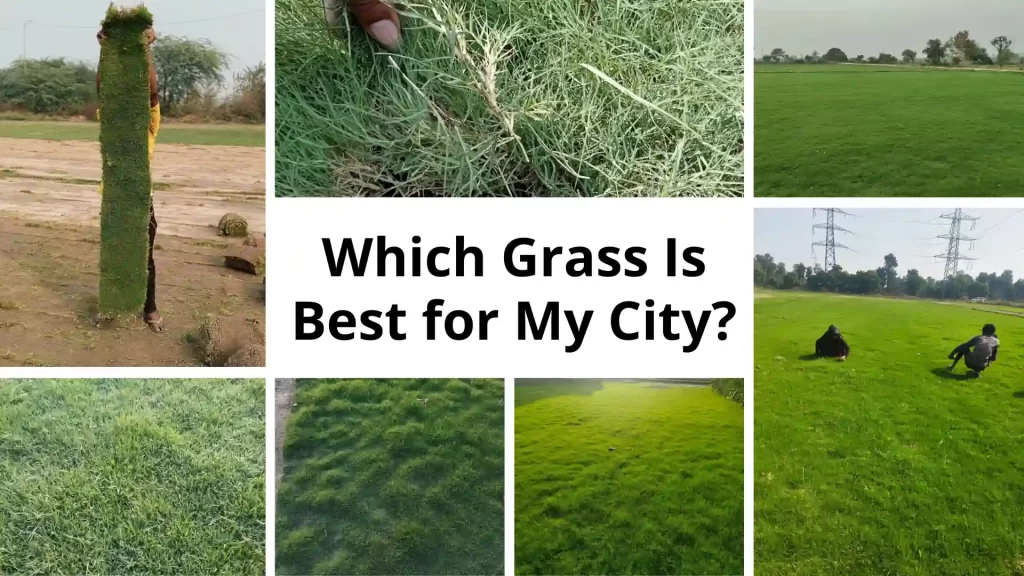
Choosing the right grass for your city sounds simple. Just pick “green grass,” right?
Wrong. Very wrong.
Grass behaves a lot like people. Some love heat, some hate it. Some thrive in crowds, some need space. And some just refuse to grow no matter how much you beg them. If you choose the wrong grass for your city, you will spend more money, more water, and more weekends feeling disappointed while staring at a patchy lawn.
This guide will help you avoid that pain.
We will break things down city by city logic, climate by climate facts, and usage by usage reality. No fake claims. No miracle grass promises. Just proven information backed by horticulture research and real-world lawn practices.
Why “Best Grass” Depends on Your City
There is no universal “best grass.”
Grass performance depends on four core factors:
- Climate (temperature range & seasons)
- Sunlight availability
- Soil type
- Usage (kids, pets, walking, or just looks)
Agricultural universities and turf research institutes agree on this principle. According to the USDA Turfgrass Management Guidelines and ICAR–Indian Council of Agricultural Research, climate suitability alone determines over 60% of turf success.
So if someone sells you grass without asking your city first, they are selling hope—not grass.
Step 1: Understand Your City’s Climate Zone
Most cities fall into one of these climate groups:
Warm Climate Cities
Examples: Delhi, Jaipur, Ahmedabad, Nagpur, Chennai
- Long summers
- Mild or short winters
- High heat tolerance needed
Grass performs best when daytime temperatures stay above 25°C.
Cool Climate Cities
Examples: Shimla, Srinagar, parts of Himachal & Uttarakhand
- Cold winters
- Short summers
- Frost tolerance required
Grass prefers temperatures between 10–25°C.
Transition Climate Cities
Examples: Chandigarh, Pune, Bengaluru
- Moderate summers
- Mild winters
- Tricky zone (grass can struggle)
These cities require balanced varieties that tolerate both heat and mild cold.
Step 2: Match Grass Type With Climate (This Is Non-Negotiable)
Warm-Season Grasses (Best for Most Indian Cities)
These grasses grow actively in summer and slow down in winter.
Scientifically proven benefits:
- Better heat tolerance
- Lower water needs
- Faster recovery from damage
Reliable options:
- Bermuda grass (Cynodon dactylon)
- Zoysia grass
- Doob grass (Indian native variety)
Research from Texas A&M Turfgrass Program and ICAR–Central Arid Zone Research Institute confirms that Bermuda and Zoysia perform exceptionally well in high-temperature regions.
Cool-Season Grasses (Limited Use in India)
These grasses struggle in Indian summers unless you live in high-altitude or cold regions.
Examples:
- Kentucky Bluegrass
- Perennial Ryegrass
- Fine Fescue
These are widely used in Europe and North America but require:
- Frequent watering
- Cooler temperatures
- Higher maintenance
For most Indian cities, these grasses are not practical long-term.
Step 3: Sunlight Matters More Than You Think
Grass is not a houseplant. It needs sun to survive.
Full Sun (6–8 hours daily)
Best grasses:
- Bermuda grass
- Zoysia grass
These grasses use sunlight efficiently and grow dense.
Partial Shade (3–5 hours)
Best grasses:
- Zoysia (some varieties)
- Shade-tolerant Bermuda hybrids
Heavy Shade (Below 3 hours)
No grass truly loves deep shade.
If your city home has tall buildings or trees, grass will struggle—period.
University turf studies from Penn State Extension confirm that less than 3 hours of sunlight reduces turf density by over 50%, regardless of fertilizer.
Step 4: How Will You Use the Lawn?
Grass does not fail. Expectations fail.
For Kids and Pets
You need high wear tolerance.
Best choices:
- Bermuda grass
- Zoysia grass
These grasses recover quickly after running, playing, and digging.
For Low Maintenance Homes
If you want fewer mowings and less water:
Best choice:
- Zoysia grass
It grows slower, stays dense, and resists weeds naturally.
For Decorative or Light-Use Lawns
If the lawn is mostly for looks:
- Fine-textured Zoysia
- Well-managed Bermuda
City-Wise Grass Recommendations (Logic-Based)
Delhi / NCR
- Climate: Hot summers, cold winters
- Best grass: Bermuda or Zoysia
- Reason: Heat tolerance + winter dormancy survival
Mumbai
- Climate: Humid, coastal
- Best grass: Bermuda
- Reason: Excellent salt and humidity tolerance
Bengaluru
- Climate: Mild, transitional
- Best grass: Zoysia
- Reason: Balanced growth year-round
Jaipur
- Climate: Hot, dry
- Best grass: Bermuda
- Reason: Drought tolerance
Chandigarh
- Climate: Transition zone
- Best grass: Zoysia or Bermuda mix
- Reason: Handles temperature swings better
Soil Type: The Silent Game-Changer
Most Indian cities have clay-loam or sandy-loam soil. Good news—both Bermuda and Zoysia adapt well to these soils.
However:
- Poor drainage kills grass faster than lack of fertilizer
- Compacted soil blocks root growth
According to FAO soil management reports, improving drainage increases turf survival by 30–40%.
Simple fix:
- Add organic compost
- Avoid over-watering
- Level soil properly before installation
Common Mistakes People Make (And Regret Later)
- Choosing grass based on photos
- Ignoring sunlight direction
- Mixing incompatible grass types
- Over-watering in summer
- Expecting instant results
Grass is not artificial turf. It needs time, patience, and realistic care.
How Long Does It Take for Grass to Establish?
- Sod installation: 2–4 weeks
- Root establishment: 6–8 weeks
- Full lawn maturity: 3–4 months
Any seller promising a “7-day perfect lawn” is selling fantasy.
Final Answer: Which Grass Is Best for Your City?
The best grass for your city is the one that:
- Matches your climate
- Gets enough sunlight
- Fits your usage needs
- Respects your maintenance limits
For most Indian cities, Bermuda grass and Zoysia grass remain the most reliable, scientifically supported choices. Not because they are popular—but because they work.
If grass could talk, it would ask only one thing:
“Did you choose me for your city, or for your screen?”
Choose wisely. Your lawn will thank you—silently, in green. 🌱
❓ Which grass is best for a stadium?
Answer:Bermuda grass (especially Tifdwarf or Tifway varieties) is the best grass for stadiums because it recovers quickly from heavy foot traffic, tolerates heat well, and provides a dense, uniform playing surface.
❓ Which lawn grass is best in India?
Answer:Doob grass is the best lawn grass in India for most homes due to its low maintenance, heat tolerance, and fast growth. For premium lawns, Korean grass is also a popular choice.
❓ What is the best type of grass for your lawn?
Answer:The best type of grass for your lawn depends on usage and climate. For regular home lawns, Doob grass works best, while Bermuda grass is ideal for high-traffic areas and Korean grass suits decorative lawns.
❓ स्टेडियम के लिए कौन सी घास सबसे अच्छी होती है?
उत्तर:स्टेडियम के लिए बरमूडा घास (Bermuda Grass) सबसे अच्छी मानी जाती है क्योंकि यह ज्यादा दौड़-भाग सहन कर सकती है, जल्दी रिकवर होती है और खेलने के लिए मजबूत सतह देती है।
❓ भारत में कौन सी लॉन घास सबसे अच्छी है?
उत्तर: भारत में डूब घास सबसे अच्छी लॉन घास मानी जाती है क्योंकि यह कम पानी में भी अच्छी रहती है और गर्म मौसम को आसानी से सहन कर लेती है। प्रीमियम लॉन के लिए कोरियन घास भी अच्छा विकल्प है।
🌱 Which Grass is Best for My City?
Note: Grass selection depends on city climate, sunlight and usage. Always consult an expert before installation.
Last Updated on 3 months ago by Anjali Mehra Ph.D. in Horticulture (Punjab Agricultural University)

Her expertise extends to every phase of natural lawn development—from soil preparation and irrigation planning to seasonal maintenance and eco-friendly pest management. Anjali has successfully managed more than 200 natural grass installation projects across Delhi NCR, including golf courses, farmhouse lawns, school campuses, corporate parks, and rooftop gardens.
At Balaji Nursery, she leads project strategy, natural grass selection, and customer education—ensuring that every lawn is designed to thrive under real-world environmental conditions. Her approach emphasizes sustainable landscaping, weed control, and the long-term health of natural turf systems.
Through her blog and advisory services, Anjali simplifies complex lawn care techniques, empowering homeowners, new gardeners, and professional landscapers with practical insights on growing and maintaining lush, resilient lawns using Indian-adapted grass species.
- Why Birds Dig Lawn Grass & How to Stop It Naturally - March 14, 2026
- Hotel Landscaping Grass Projects in J&K - March 10, 2026
- Lawn Grass Installation in Hilly Areas - March 5, 2026