 by Balaji Nursery Editorial Team
Why Lawn Grass Fails After Installation (Real Indian Case Studies)
Installing lawn grass looks simple. Lay the sod, water it, wait a few weeks, and enjoy a green carpet. That’s the dream.
Reality in India often looks different.
Brown patches appear. Grass stops spreading. Some areas dry out. Others turn into muddy messes. Within months, homeowners start asking the same painful question:
“Humne galat grass lagwa diya kya?”
Not always.
In most Indian cases, lawn grass fails not because of the grass variety, but because of human mistakes, soil conditions, climate mismatch, and poor after-care. This article explains why lawn grass fails after installation, using real Indian case scenarios, not theory from foreign lawns.
Let’s break it down honestly.
🎧 Listen: Why Lawn Grass Fails After Installation
Understanding Lawn Grass Failure in India
India is not one lawn country. We have deserts, coastal humidity, hill stations, dry plains, and tropical heat — all in one map.
Most lawn failures happen when:
- The grass type doesn’t match the climate
- Soil preparation gets skipped
- Watering follows guesswork
- Installation happens at the wrong season
According to ICAR (Indian Council of Agricultural Research) and multiple State Agriculture University turf studies, turfgrass survival depends more on management than on variety selection.
In simple words:
Grass is innocent. Humans make mistakes.
Case Study 1: Overwatering Kills More Lawns Than Heat
Location: Delhi NCR
Grass Type: Korean Grass (Zoysia)
Problem: Yellowing and root rot within 30 days
This is one of the most common Indian lawn failures.
The homeowner watered the lawn twice daily, believing more water means faster growth. Instead, the grass suffocated.
Korean grass has shallow roots initially. Constant wet soil blocks oxygen. Roots start rotting silently.
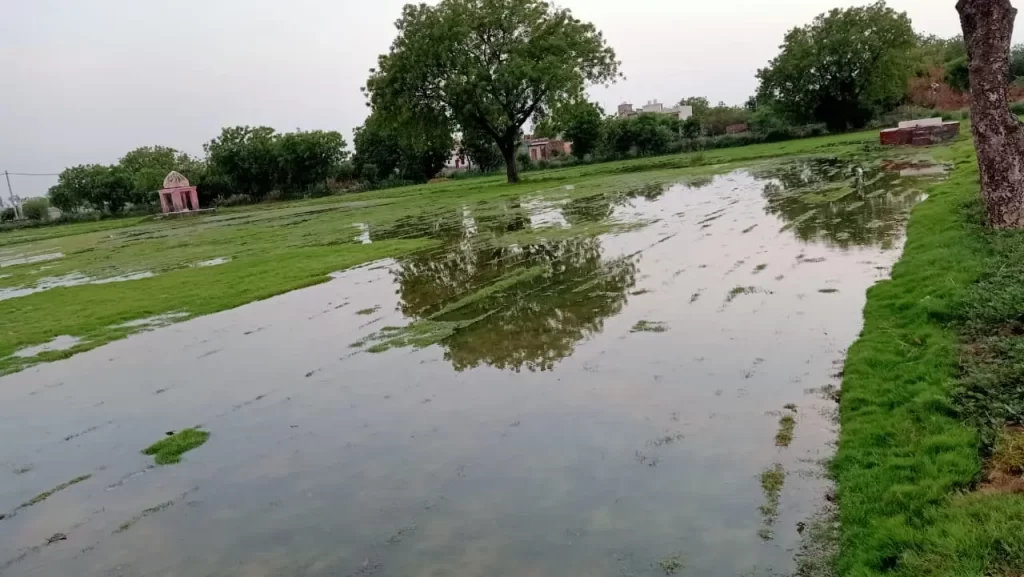
Symptoms noticed:
- Yellow patches
- Soft, smelly soil
- Grass pulling out easily by hand
What went wrong?
- No drainage layer
- No watering schedule
- Ignoring local humidity
Expert logic:
ICAR turf management guidelines clearly state that frequent light watering is harmful during establishment. Deep but controlled watering works better.
Case Study 2: Poor Soil Preparation = Guaranteed Failure
Location: Jaipur
Grass Type: Doob Grass
Problem: Patchy growth, weeds everywhere
In this case, the installer skipped soil improvement to save cost.
The soil had:
- High sand
- Construction debris
- Cement dust
Grass roots never connected with nutrients.

What people forget:
Grass grows below the soil before it grows above it.
Without:
- Proper soil leveling
- Organic matter (FYM or compost)
- Mild sand-loam mix
Even the toughest grass will fail.
According to CPWD Horticulture Specifications, lawn soil should be friable, well-drained, and nutrient-balanced. Many Indian sites ignore this completely.
Small lawn issues agar time par diagnose na kiye jaayein to bade damage me badal sakte hain. Isi liye experts suggest karte hain ki pehle diagnose lawn issues before they spread using a reliable diagnosis tool.
Case Study 3: Wrong Grass for the Wrong Climate
Location: Shimla outskirts
Grass Type: Korean Grass
Problem: Slow growth and winter burn
Korean grass prefers warm to mild climates. In cold hill regions, growth slows drastically.
The grass didn’t die immediately. It just… stopped living properly.
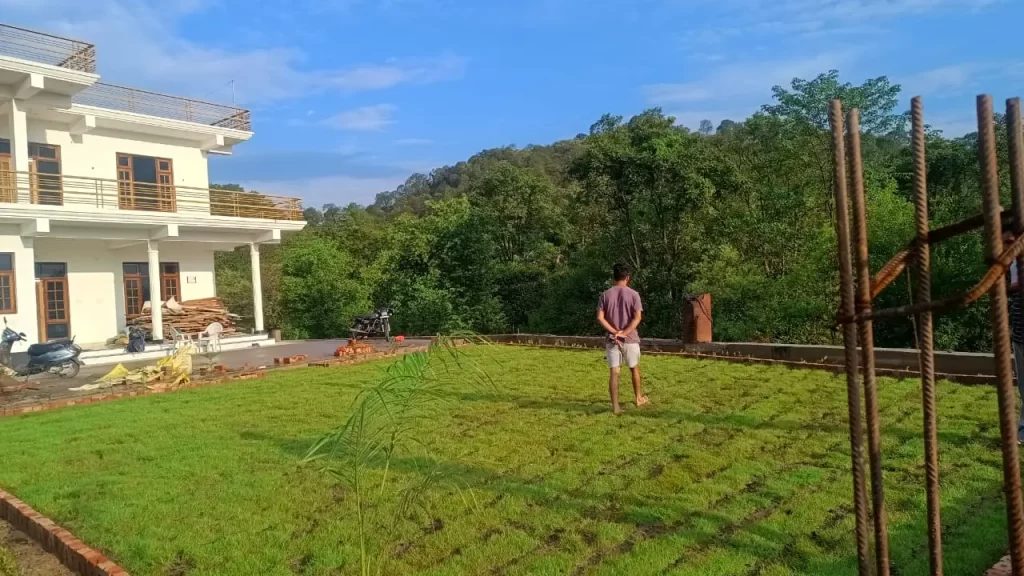
One major reason lawn grass fails in India is choosing the wrong variety for local climate and soil, so always prefer high-quality Natural lawn grass that is fresh, region-suitable, and properly rooted.
Mistake made:
Using grass popular on Google, not grass suitable for location.
Reality check:
No grass is “best for all India.”
That line alone causes thousands of lawn failures every year.
Climate Mismatch: The Silent Lawn Killer
Indian homeowners often ask one question:
“Bhaiya, kaunsa grass best hai?”
The correct answer is:
“Aapka area kaunsa hai?”
Climate affects:
- Root spread
- Water demand
- Disease resistance
- Seasonal dormancy
For example:
- South India supports Korean and Bermuda well
- North plains need controlled irrigation
- Coastal areas require salt-tolerant management
- Desert zones demand soil conditioning first
Ignoring climate logic leads to predictable failure.
Case Study 4: Installation Season Was Completely Wrong
Location: Punjab
Grass Type: Korean Grass
Problem: Grass dried within 2 weeks
The grass was installed in peak May heat.
Even healthy sod struggles when temperatures cross comfort limits during establishment.

Most Indian turf experts agree:
- Spring and early monsoon give best results
- Extreme summers and winters increase risk
Grass needs time to anchor roots. Harsh weather interrupts that process.
Watering Mistakes That Destroy Lawns
Let’s be honest. Indians love water.
Unfortunately, lawns don’t.
Common watering mistakes:
- Watering at night
- Daily shallow watering
- Flooding slopes
- Ignoring drainage
According to agricultural extension notes from Punjab Agricultural University, improper irrigation causes:
- Fungal infections
- Root suffocation
- Weed dominance
Smart watering follows logic, not emotion.
Fertilizer Overdose: The “Healthy” Mistake
Location: Bangalore
Grass Type: Korean Grass
Problem: Burnt grass tips
The owner applied urea within 10 days of installation.
Big mistake.
New grass roots are sensitive. Strong fertilizers shock them.
Correct approach:
- Wait 3–4 weeks
- Use mild organic manure first
- Introduce balanced NPK slowly
Healthy lawns grow steadily, not overnight.
Weed Invasion After Installation
Weeds don’t appear by magic.
They appear because:
- Soil was exposed too long
- Lawn coverage stayed uneven
- Watering encouraged weed seeds

Many Indian soils already contain dormant weed seeds.
Proper lawn density is the best weed control. Chemicals should always be the last option, not the first reaction.
Lack of After-Care: The Most Ignored Factor
Many people think lawn installation is a one-day job.
In reality, the first 45 days decide the lawn’s future.
Missing after-care steps include:
- Rolling after installation
- Monitoring root grip
- Adjusting watering based on weather
- Light trimming at the right time
Grass needs supervision, not neglect.
What Indian Case Studies Clearly Prove
After observing hundreds of lawn sites across India, one conclusion stays consistent:
Lawn grass fails more because of management errors than because of grass quality.
This pattern matches findings from:
- ICAR turf advisories
- State horticulture department manuals
- CPWD landscaping guidelines
The science agrees with on-ground reality.
How to Prevent Lawn Grass Failure (Practical Checklist)
Before installation:
- Match grass to climate
- Prepare soil properly
- Check drainage
During installation:
- Choose the right season
- Avoid heat stress
- Roll the surface lightly
After installation:
- Water smartly
- Avoid fertilizers early
- Monitor daily for 30–45 days
Simple steps. Big difference.
Final Thoughts: Lawn Grass Doesn’t Fail Randomly
Grass failure always has a reason.
- It might be soil.
- It might be water.
- It might be the climate.
- It might be timing.
But it’s never magic.
When you treat lawn installation like a horticulture process, not a decoration project, results improve naturally.
Healthy lawns don’t come from shortcuts.
They come from understanding, patience, and practical decisions.
And yes — sometimes from asking the right expert before laying the first roll of grass.
Last Updated on 8 months ago by Balaji Nursery Editorial Team

- How do you pick the right planter size so your plant actually thrives? - October 10, 2026
- Tulsi Plant Direction as per Vastu: Where to Keep It at Home - October 3, 2026
- Which garden planter is right for your home, balcony or terrace? - October 1, 2026