 by Balaji Nursery Editorial Team
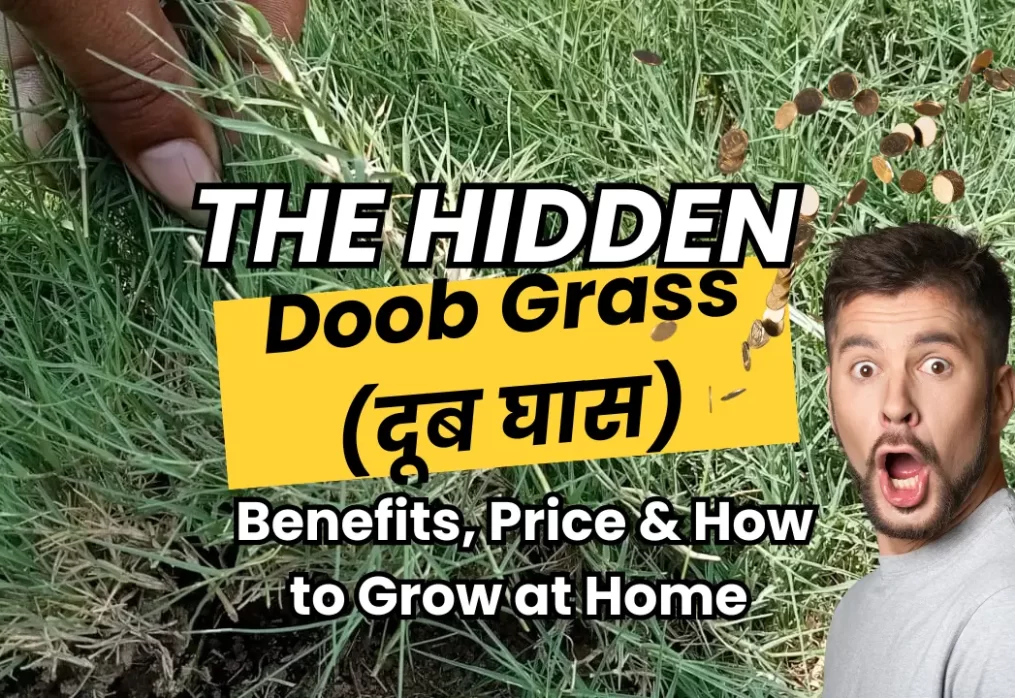
Doob Grass (दूब घास): Benefits, Price & How to Grow at Home
Doob grass (Cynodon dactylon) ek ayurvedic aushadhi hai jo India mein sadiyon se upyog hoti hai. Iske mukhya fayde hain — blood sugar control, wound healing, immunity boost, aur skin problems mein rahat. Doob grass ki kimat ₹10–₹30 per sq ft hoti hai lawn ke liye. Ise ugane ke liye dhoop wali jagah, kam paani, aur sandy loam mitti chahiye — yeh India ke kisi bhi climate mein aasani se ugti hai. Balaji Nursery se fresh doob grass mangwane ke liye call karein — 8766234417.
Doob grass ke ayurvedic fayde bahut hain — yeh blood sugar (diabetes) control karta hai, wounds aur cuts jaldi theek karta hai, skin rashes aur eczema mein rahat deta hai, aur immunity strong karta hai. Doob grass ka ras (juice) roz subah khali pet peene se maximum fayda milta hai. Ayurveda mein ise Durva kaha jata hai aur yeh Charak Samhita mein bhi varnan hai.
Doob grass (Bermuda grass / Durva) ki kimat depend karti hai type aur quantity par — loose doob grass ₹5–₹15 per sq ft, doob grass rolls/turf ₹20–₹40 per sq ft, aur doob grass seeds ₹200–₹500 per kg tak milte hain. Lawn ke liye rolls (turf) sabse achha option hai — jaldi cover karta hai aur uniform dikhta hai. Balaji Nursery se best price mein mangwane ke liye call karein — 8766234417.
Doob grass ugana bahut aasaan hai — 3 tarike hain: (1) Seeds se — March–June mein seeds bichayein, halki mitti se dhakein, roz paani dein; (2) Sprigs se — chhoti chhoti jad wali tukdi zameen mein lagayein; (3) Turf/rolls se — sabse tez tarika, seedha bichao aur paani do. Doob grass ko full sunlight chahiye (min. 6 ghante), overwatering avoid karein, aur har 3–4 hafte mein cutting karein ghani growth ke liye.
Doob Grass, scientifically known as Cynodon dactylon, is one of the most common yet most underestimated grasses in India.
You see it everywhere — temples, village courtyards, playgrounds, and even cracks in pavements.
But here’s the irony:
The same grass people call “jungli ghaas” is also medicinal, spiritually important, eco-friendly, and perfect for Indian lawns.
This article explains everything clearly — benefits, real price, how to grow it at home, and whether it is right for your city and climate.
No myths. No fake claims. Only logic, science, and Indian ground reality.
Doob Grass at a Glance
| Detail | Answer |
| Common Hindi name | Doob, Dub, Durva (दूब / दूर्वा) |
| English name | Bermuda grass (also called devil’s grass or dog’s tooth grass) |
| Botanical name | Cynodon dactylon |
| Family | Poaceae (the grass family) |
| Sanskrit name | Durva |
| Tamil | Arugampul |
| Telugu | Garika |
| Marathi | Harali / Durva |
| Gujarati | Dharo |
| Punjabi | Khabbal |
| Bengali | Durba |
| Growth habit | Perennial, creeping, spreads by stolons and rhizomes |
| Best known uses | Lawns, Ganesh puja offering, traditional Ayurvedic use, erosion control |
Doob grass (Cynodon dactylon) is the Hindi name for what is called Bermuda grass in English. It is also known as Durva, Dub or Dubhi in different parts of India.
What Is Doob Grass? दूब घास क्या है? (Simple Botanical Explanation)
Doob grass is a perennial creeping grass that spreads through stolons and rhizomes.
This growth habit makes it:
Extremely fast-spreading
Highly tolerant to heat and foot traffic
Difficult to kill (even if you try)
Botanical family: Poaceae
Common English name: Bermuda Grass
Indian names: Doob, Durva, Arugampul (Tamil)
From a plant physiology perspective, Doob grass has C4 photosynthesis, which explains why it thrives in Indian summers when many plants struggle.
Why Doob Grass Is Perfect for Indian Conditions
India’s climate is tough — high heat, uneven rainfall, dusty soil, and heavy usage.
Doob grass handles all of this without drama.
Key Adaptations
| Factor | How Doob Grass Handles It |
|---|---|
| Extreme heat | Survives 45°C+ summers |
| Water stress | Goes dormant, doesn’t die |
| Foot traffic | Repairs itself naturally |
| Poor soil | Grows even in low fertility |
| Urban pollution | High tolerance |
That’s why it dominates playgrounds, temple lawns, and public landscapes across India.
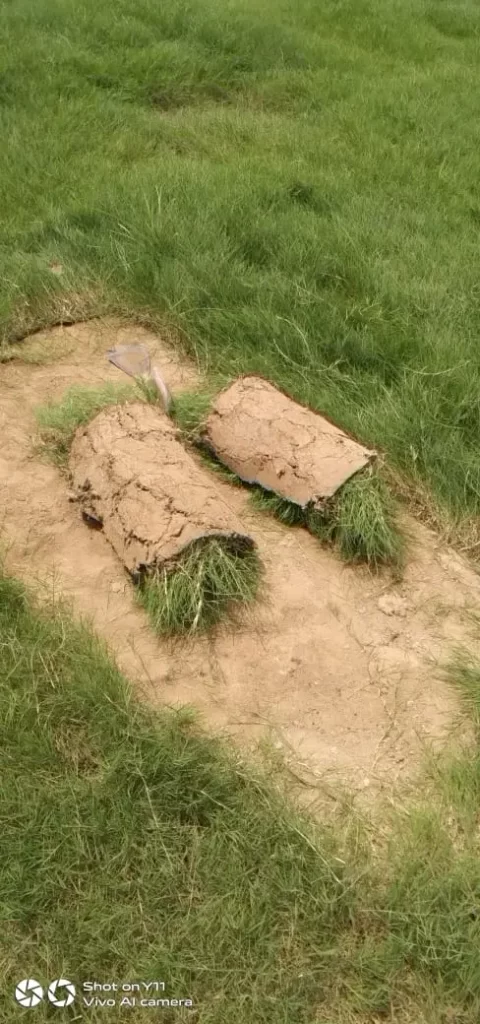
Doob Grass Benefits दूब घास के फायदे (Backed by Science & Practical Use)
1. Health & Medicinal Benefits
Traditional Ayurveda and modern studies both acknowledge Doob grass for:
Anti-inflammatory properties
Blood sugar regulation support
Wound healing when applied as paste
It contains flavonoids, alkaloids, and antioxidants — real phytochemicals, not WhatsApp claims.
Important note: Always consult a medical professional before medicinal use.
2. Religious & Cultural Importance
In Hindu rituals, Doob grass symbolizes:
Longevity
Purity
Mental stability
It is commonly offered during Ganesh Puja, not randomly — but because it stays green even under stress. Symbolism meets biology.
3. Lawn & Landscaping Benefits
From a lawn expert’s angle, Doob grass is a workhorse.
Dense carpet formation
Minimal maintenance
Fast recovery after damage
Low water requirement
That’s why it’s widely used in parks, schools, temples, and residential lawns.
If you are planning to develop a durable and low-maintenance lawn in Indian conditions, choosing the right natural lawn grass for Indian homes is extremely important. Doob grass works well for high-use areas, but professional guidance helps in selecting the best grass variety based on soil type, sunlight, and local climate.
Doob Grass Side Effects and Precautions (दूब घास के नुकसान)
Doob grass has a long history of traditional use, but most of the research on its extracts is laboratory or animal-based, and good human studies are limited. That is why a few precautions matter:
- Blood sugar medicines: Doob is traditionally used for blood sugar support. If you take diabetes medication, check with your doctor before drinking doob juice regularly, as the combined effect is not well studied.
- Pregnancy and breastfeeding: There is not enough reliable safety data. Avoid medicinal use unless your doctor approves.
- Allergies: Bermuda grass pollen is a known trigger for hay fever and allergic rhinitis in some people. If you get sneezing or itching around cut grass, avoid handling or consuming it.
- Where it was grown: Roadside, park or lawn grass may carry pesticides, animal waste or pollution. Never use grass from sprayed or dirty areas for juice or paste.
- Hygiene: Wash thoroughly, and use fresh grass only.
Doob grass is not a substitute for medical treatment. Please consult a qualified doctor or Ayurvedic practitioner before using it for any health condition.
Doob Ki Jad (दूब की जड़ के उपयोग): What Is It and How Is It Used?
Doob spreads through creeping stems (stolons) and underground stems (rhizomes), and it roots at each node. When people say “doob ki jad”, they usually mean the root and rhizome mass pulled out with the grass.
In traditional practice, the root and the whole plant are sometimes used in kadha (decoction), paste or juice. Here is how it is typically used:
- Part used: the whole plant, including the root and rhizome mass, washed thoroughly
- Common forms: kadha (decoction), paste for external use, or fresh juice
- Preparation: wash well, grind and strain; use only fresh grass from clean, unsprayed ground
- Precautions: the same as above (diabetes medication, pregnancy, allergies)
Please consult a doctor or Ayurvedic practitioner before using doob root for any health condition.
How to Identify Doob Grass (दूब घास की पहचान)
Look for these features:
- Fine, narrow blades, usually grey-green to bright green
- Creeping stems that run along the soil and root at the joints
- Seed heads with 3-7 slender spikes radiating from one point, like fingers
- Dense mat that recovers quickly after cutting or trampling
Doob Grass vs Look-Alikes
| Plant | How it differs |
| Nutgrass (Motha, Cyperus rotundus) | A sedge, not a true grass. Triangular stem, grows from tubers, and is a persistent weed. |
| Crabgrass (Digitaria) | Broader, lighter blades. Annual, so it dies back each year. |
| Mexican / Korean lawn grass | Look softer or broader and do not creep the same way. Compare in your lawn guide. |
How to Grow Durva at Home for Puja (दूब घास कैसे उगाएं?)
If you only need a small supply of Durva for pooja, a pot is enough:
- Pot: Choose a wide, shallow pot (6-8 inches deep) with drainage holes.
- Soil: Mix garden soil, sand and compost, roughly in the 2:1:1 ratio used for lawns.
- Planting without seeds: Take a clump with runners from a clean, unsprayed patch. Press the runners flat on moist soil and cover the joints lightly.
- Sun: Keep the pot where it gets 4-6 hours of direct sunlight, such as a balcony or terrace.
- Water: Water lightly every day for the first 10 days, then 2-3 times a week once it spreads.
- Harvest: Snip blades and trim regularly. Frequent cutting makes it grow thicker.
Growing your own also means you know it has not been sprayed with chemicals.
Doob Grass Price in India (Actual Market Reality)
Price depends on form, quality, and city logistics.
Doob Grass Price Table (India)
| Form | Average Price (₹) |
|---|---|
| Loose runners | ₹3 – ₹6 per sq ft |
| Nursery-grown sod | ₹6 – ₹10 per sq ft |
| Fully developed lawn | ₹12 – ₹18 per sq ft |
City-wise variation exists due to transport and labour costs.
Tip: Always ask whether the price includes installation + soil prep. Many sellers don’t.
Doob Grass vs Other Lawn Grasses (Quick Comparison)
| Feature | Doob Grass | Korean Grass | Mexican Grass |
|---|---|---|---|
| Maintenance | Very low | Medium | Medium |
| Foot traffic | Excellent | Low | Medium |
| Water need | Low | Medium | Medium |
| Cost | Cheapest | Expensive | Moderate |
| Indian summers | Excellent | Struggles | Good |
Conclusion:
For budget + durability → Doob Grass wins.
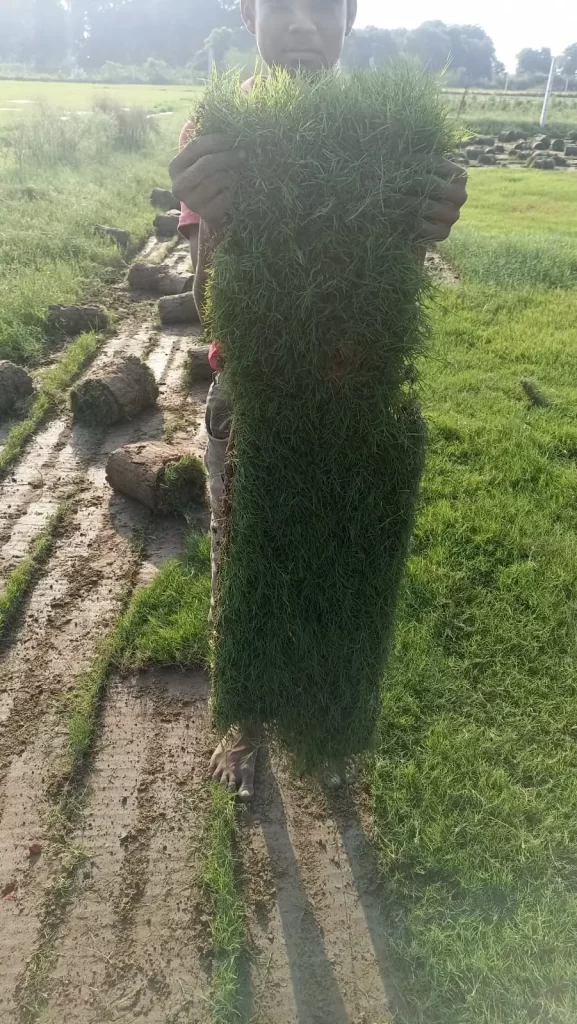
How to Grow Doob Grass at Home (Step-by-Step)
Growing Doob grass is easier than most houseplants.
Step 1: Soil Preparation
Use well-drained soil
Mix garden soil + sand + compost (2:1:1)
Avoid waterlogging at all costs
Step 2: Planting Method
You can grow it using:
Runners (best option)
Seeds (slow, not recommended for lawns)
Press runners gently into moist soil and cover roots lightly.
Step 3: Watering Logic (Not Overwatering!)
First 10 days: light watering daily
After establishment: 2–3 times a week
Overwatering causes fungal issues.
Yes, grass also hates “too much love”.
Step 4: Sunlight Requirement
Minimum 5–6 hours direct sunlight
Partial shade = slower growth
No grass survives permanently without sun. Anyone claiming otherwise is lying.
Even though Doob grass is easy to grow, proper soil preparation and leveling play a major role in long-term lawn health. Many homeowners prefer professional lawn installation services to ensure uniform grass coverage, correct drainage, and faster establishment, especially for medium to large lawn areas.
Doob Grass Maintenance (Realistic Schedule)
| Task | Frequency |
|---|---|
| Mowing | Every 7–10 days |
| Watering | 2–3 times/week |
| Fertilizer | Once every 2 months |
| Weed check | Monthly |
Use organic compost or vermicompost.
Chemical overdose makes grass weak long-term.
Homeowners often compare different grass types before finalizing their lawn. If you are still confused between options like Doob grass, Korean grass, or Mexican grass, this detailed guide on the best grass for lawn in India explains which grass performs best under different Indian climate conditions.
Common Problems & Solutions
Problem: Grass turning yellow
Reason: Overwatering or poor drainage
Problem: Patchy growth
Reason: Lack of sunlight or uneven soil
Problem: Weeds mixing in
Reason: Initial loose soil
Doob grass fixes itself once it establishes — patience matters.
Doob Grass Seeds: Should You Use Them?
Doob grass can be grown from seed, but seed is slower and less uniform than runners or sod, so it suits large open areas or patching rather than a premium lawn. Sow in the warm months and keep the top layer of soil moist until germination. For a quick, even lawn, turf rolls or runners are better.
Explore our Lawn Grass Seeds and Natural Lawn Grass for ready-to-use options.
Is Doob Grass Suitable for Your City? (India-Specific Answer)
| City / Region | Suitability |
|---|---|
| Delhi NCR | Excellent |
| Punjab | Excellent |
| Rajasthan | Excellent |
| Mumbai | Good (needs drainage) |
| Bangalore | Good |
| Hill regions | Moderate |
If your city has hot summers, Doob grass feels at home.
Environmental Benefits (Often Ignored)
Prevents soil erosion
Improves ground temperature
Absorbs dust and pollutants
Requires less water than fancy lawns
From an ecological lens, Doob grass is sustainable landscaping.
Where to Buy Doob Grass in India
You can buy doob grass as loose runners, nursery-grown sod, or seed. Balaji Nursery supplies natural lawn grass across India, with installation available. Check what the quoted price includes (soil preparation, labour, transport) before you compare offers.
Browse Natural Lawn Grass, Loose Natural Grass and Sod and Turf Installation.
FAQs – Doob Grass (People Also Ask)
Is Doob grass good for home lawns?
Yes. It is one of the most durable and low-maintenance grasses for Indian homes.
How long does Doob grass take to spread?
Under good sunlight and watering, it spreads visibly within 15–20 days.
Does Doob grass need daily watering?
No. Overwatering harms it. 2–3 times a week is enough once established.
Can Doob grass grow in pots?
Yes. A wide, shallow pot with good drainage and 4-6 hours of sun works well for small quantities, such as Durva for puja. For a full lawn, open ground is better.
Is Doob grass good for pets and kids?
Yes. It is non-toxic and soft when maintained properly.
Final Verdict: Should You Choose Doob Grass?
If you want:
Low cost
High durability
Indian climate compatibility
Minimal maintenance
Then Doob Grass is not a compromise — it’s a smart choice.
It has survived centuries not because it is weak, but because it is biologically intelligent.
Last Updated on 2 days ago by Balaji Nursery Editorial Team

- How do you pick the right planter size so your plant actually thrives? - October 10, 2026
- Tulsi Plant Direction as per Vastu: Where to Keep It at Home - October 3, 2026
- Which garden planter is right for your home, balcony or terrace? - October 1, 2026