How to Improve Garden Soil Drainage in Clay-Heavy Soil: A Step-by-Step Guide
 Balaji Nursery Editorial Team
8 min read
If water stays on your garden for hours after rain, and the soil turns sticky when wet and hard as brick when dry, you are probably dealing with clay. The good news is that you can improve garden soil drainage without replacing all your soil. The most reliable method is to add organic matter such as compost, loosen compacted ground, avoid working wet soil, and grow in raised beds where needed. Adding sand is the common shortcut that usually backfires.
This guide walks you through each step, in the order that works best for Indian gardens.
Why Clay Soil Drains Poorly
Clay particles are extremely fine and sit tightly packed, so the gaps between them are tiny. Water moves through these gaps slowly, and the soil stays wet. Roots then struggle to get oxygen, which can lead to yellow leaves, weak growth and root rot.
Clay is not all bad. It holds nutrients well and does not dry out as fast as sandy soil. The aim is to open up its structure, not to turn it into a different soil. Extension research from Oregon State University adds a realistic note: clay stays clay, and you must keep adding organic matter regularly to maintain the improvement.
Step 1: Confirm You Actually Have Clay Soil
Before spending money on amendments, check what your soil is.
- Squeeze test: Take a handful of moist soil and squeeze it. If it forms a smooth, sticky ball that holds its shape and can be rolled into a ribbon, it is high in clay.
- Jar test: Fill a clear jar one-third with soil, top it up with water, add a pinch of salt and shake well. Leave it for a day. The layers of sand, silt and clay settle at different speeds, showing roughly how much of each you have.
- Soil test: A lab report shows pH and nutrient levels, which helps you choose amendments wisely. Your local agricultural department or a soil testing lab can help.
Step 2: Test How Fast Your Soil Drains
Dig a hole about 30 cm deep and wide, fill it with water and let it drain. Fill it again and note how long the second fill takes to disappear. Many gardening guides treat anything over about four hours as poor drainage. Test a few spots, because drainage can differ across one garden.
Step 3: Loosen the Soil, but Only When It Is Right
Never dig or till clay soil when it is wet. Wet clay gets smeared and compacted, and the damage can last for years. Wait until the soil crumbles in your hand instead of forming a sticky ball.
For beds, use a garden fork to loosen the top 20–25 cm. For an existing lawn, aerate by pushing a fork into the ground every 10–15 cm, or use a hollow-tine aerator that removes small soil plugs.
Step 4: Add Compost and Other Organic Matter
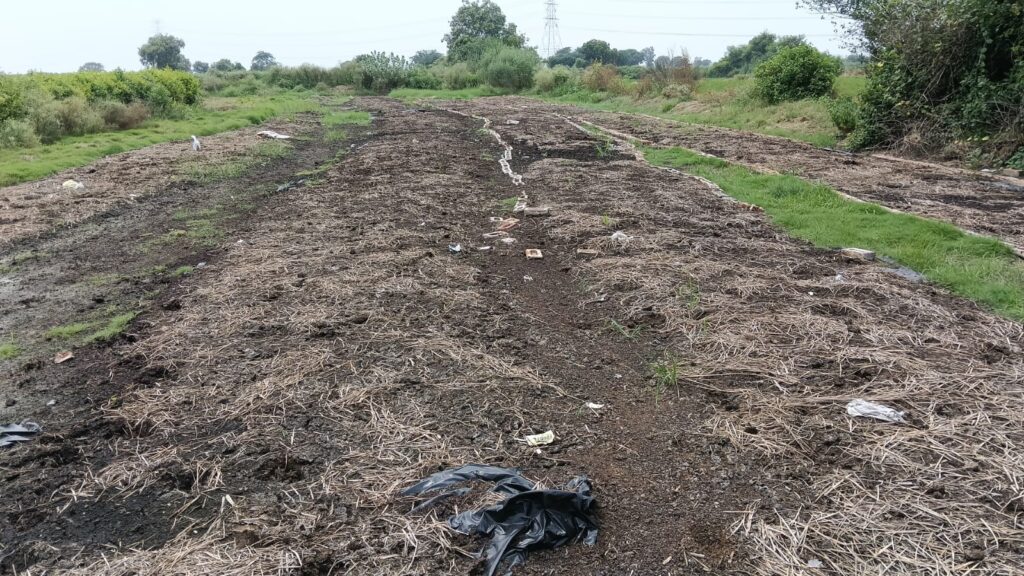
Organic matter is the best garden soil amendment for clay. As it breaks down, it helps fine particles clump together, creating larger pores for water and air. It also feeds earthworms and soil microbes, which keep improving the structure.
Good choices in India include:
- Well-rotted cow dung manure
- Vermicompost
- Garden compost
- Leaf mould or well-decomposed leaves
How much to add: Clemson University suggests about 2 inches (5 cm) of organic matter worked into the top 6 inches (15 cm) of soil as a starting point. University of Georgia advice warns that adding too much at once, especially in clay, can cause a build-up of soluble salts. So spread the effort over seasons instead of doing it all in one go. For lawns, a thin layer of compost spread over the grass and brushed in after aeration is enough. Top it up every year.
Always use fully decomposed material. Fresh manure can burn roots and bring weeds.
Step 5: Do Not Add Sand to Clay
This is the most common mistake. It seems logical that sandy soil drains well, so mixing sand into clay should help. In practice, small amounts of sand fill the gaps between clay particles and make the soil denser, almost like concrete. Several US university extension services warn against this.
If you must use sand, use coarse sand together with plenty of compost, not on its own. Compost does most of the work either way.
Step 6: Consider Gypsum Only With a Soil Test
Gypsum is often sold as a “clay breaker”. The evidence is mixed. It can improve structure in sodic or highly alkaline soils, but in many garden soils its effect is small, and extension experts say organic matter does far more. Get your soil tested first. If a lab reports a sodium or alkalinity problem, gypsum may be worth using. If not, spend the money on compost.
Step 7: Build Raised Beds Where Drainage Stays Poor
If an area stays wet despite your efforts, change how you grow there. A raised bed 20–30 cm high, filled with a loose mix of garden soil and compost, lifts the root zone above wet ground. It also stops you from walking on and compacting the growing area. This works well for vegetables, herbs and seasonal flowers.
Step 8: Fix Levels, Slopes and Water Flow
Sometimes the soil is not the only problem. Check for low spots where water collects, and for roof or driveway runoff flowing into the garden. Fill hollows, create a gentle slope away from buildings, and direct downpipes to a drain or planted border. For wider water problems, see our guide to garden waterlogging solutions.
Step 9: Mulch and Grow Soil-Building Plants
Spread 5–7 cm of organic mulch, such as dry leaves or shredded garden waste, around plants. It protects clay from heavy rain, reduces surface cracking in summer and slowly adds organic matter as it breaks down.
For vacant beds, green manure crops such as dhaincha or sunn hemp are used across India to add organic matter. Their roots also help open up the soil. Dig them in before they flower.
Common Mistakes to Avoid
- Digging or tilling wet clay, which destroys what structure the soil has
- Adding a thin layer of sand or topsoil over clay, which rarely helps and can trap water
- Putting gravel at the bottom of a planting hole, which can create a bowl that holds water around roots
- Adding too much compost or manure in one go
- Walking on wet beds and lawns
- Expecting results in one season. Clay improves gradually
When Should You Do This in India?
Work on beds when the soil is dry enough to crumble, ideally before the monsoon so the amendments have time to settle. Avoid heavy digging during or right after the rains. If you are planning a new lawn, soil preparation should be finished before you lay the grass, because fixing drainage under an established lawn is much harder.
Getting Professional Help
If your soil is hard, patchy and water-logged across a large area, or you are preparing ground for a new lawn, a professional assessment saves time and money. Balaji Nursery’s soil treatment services cover site and soil assessment, ground preparation, levelling, loosening compacted areas, drainage considerations and suitable soil amendments, depending on your site. If you are still deciding what to plant, this guide on the best soil types for garden grass explains what different soils mean for a lawn.
Conclusion
To improve garden soil drainage in clay, work with the soil rather than against it. Test it, loosen it when it is dry enough, feed it with compost every season, skip the sand, and use raised beds or better levels where the problem is stubborn. Clay will never behave like sandy soil, but it can become far easier to grow in.
If you want expert advice before you start, contact Balaji Nursery for garden preparation guidance with your location, area and a few photos of the site.
Frequently Asked Questions
What is the fastest way to improve clay soil drainage?
There is no instant fix. The quickest practical steps are loosening the soil when it is dry enough and mixing in compost. For immediate results in a problem area, build a raised bed. Lasting improvement comes from adding organic matter every season.
Does sand improve clay soil drainage?
Usually not. Small amounts of sand can make clay denser. Compost works better. If you use sand, mix coarse sand with plenty of organic matter.
How much compost should I add to clay soil?
A common starting point is about 5 cm of compost worked into the top 15 cm of soil. Avoid adding too much in one go, and top up each year with a thin layer.
Is gypsum good for clay soil?
It helps in some soils, especially sodic or alkaline ones, but often makes little difference in ordinary garden soil. A soil test will tell you if it is worth using.
Can I grow plants in clay soil without changing it?
Yes, if you choose plants that tolerate heavy, moist soil and avoid planting in waterlogged spots. Raised beds and mulch make it much easier. Many plants still do best once you have added organic matter.
Last Updated on 3 hours ago by Balaji Nursery Editorial Team

- How to Improve Garden Soil Drainage in Clay-Heavy Soil: A Step-by-Step Guide - November 28, 2026
- Garden Waterlogging Solutions: How to Fix a Waterlogged Garden After Heavy Rain - November 27, 2026
- Grass for Commercial Frontage: Showrooms, Petrol Pumps - November 19, 2026
 Balaji Nursery Editorial Team