 by Anjali Mehra Ph.D. in Horticulture (Punjab Agricultural University)
Can Lawn Grass Grow Without Direct Sunlight? (2026 Expert Guide)
A lush green lawn is usually associated with open skies and direct sunlight. In reality, many Indian homes, villas, apartments, and commercial properties have shaded lawn areas caused by buildings, boundary walls, trees, pergolas, balconies, or parking structures.
This leads to a very common question:
Can lawn grass grow without direct sunlight?
The expert answer in 2026 is:
👉 Yes—but only under specific conditions and with the right strategy.
Grass does not need harsh sunlight all day, but it cannot survive in complete darkness either. This guide explains how lawn grass behaves in low-light environments, which grass types work best, and how to maintain a healthy lawn without direct sun exposure.
Search Intent
Informational (with practical decision support)
Users want to know whether it’s possible, which grass works, and what care changes are required.
How Sunlight Affects Lawn Grass Growth
Sunlight powers photosynthesis, which allows grass to produce energy. When direct sunlight is reduced, grass relies on filtered or indirect light instead.
In low-light conditions:
- Grass blades become thinner
- Growth slows down
- Root systems weaken
- Moisture stays longer in soil
- Risk of fungal disease increases
📌 Experience insight:
Most shaded lawns fail not due to lack of sun, but due to overwatering and wrong grass selection.
With the right planning, shaded lawns can still look dense and healthy.
How Much Light Does Lawn Grass Really Need?
Most natural lawn grasses need at least 3–4 hours of usable light per day, which can include:
- Morning sunlight
- Dappled light through trees
- Reflected light from walls or floors
- Bright indirect daylight
❌ Areas with zero natural light (closed courtyards, basement zones) are not suitable for natural grass long-term.
Best Grass Types That Grow Without Direct Sunlight
1. Korean Grass (Zoysia – Shade-Tolerant Types)
Korean grass is widely used in urban Indian landscapes.
- Performs well in partial shade
- Dense, carpet-like appearance
- Slow growing but durable once established
Best for: Homes with filtered sunlight and balconies with open sides.
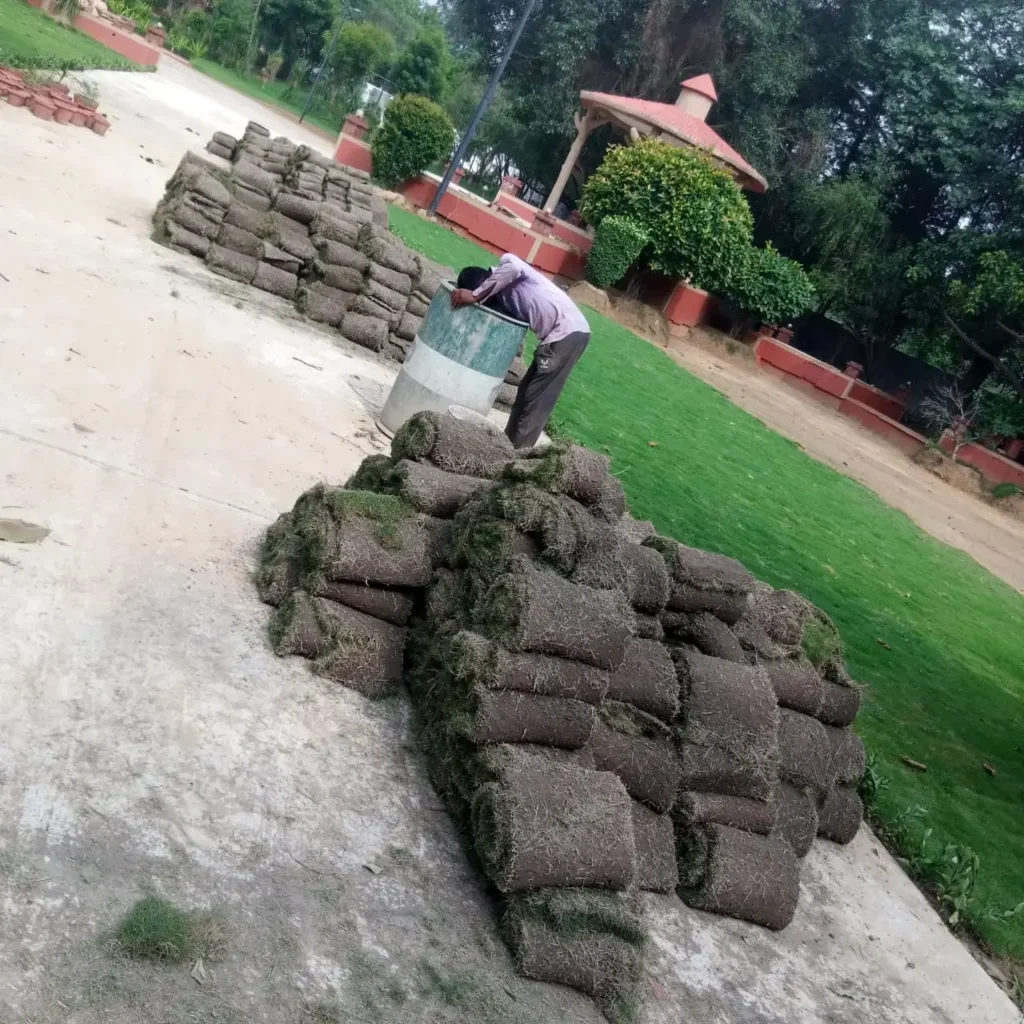
 2. St. Augustine Grass (Highly Shade-Tolerant)
 2. St. Augustine Grass (Highly Shade-Tolerant)
One of the best warm-season grasses for shade.
Why it works:
- Broad leaves capture indirect light
- Performs well under trees
- Handles 3–5 hours of light
⚠️ Needs good drainage to avoid fungal issues.
3. Fine Fescue (Cool & Moderate Climates)
Excellent for areas with heavy shade and cooler temperatures.
- Performs well near buildings
- Low fertilizer requirement
- Natural soft texture
4. Buffalo Grass (Limited Shade Only)
Buffalo grass can survive in bright indirect light, but not deep shade.
- Low water requirement
- Suitable for low-maintenance lawns
- Needs at least some daylight exposure
Can Lawn Grass Grow in Full Shade With No Sunlight?
No.
Natural grass cannot survive in areas with:
- No daylight
- Constant darkness
- Closed overhead structures
In such spaces, better alternatives are:
- Artificial turf
- Shade-loving ground covers
- Decorative stones or pavers
- Landscape redesign
Trying to force natural grass here leads to patchy lawns and recurring failure.
Soil Preparation for Shaded Lawn Areas
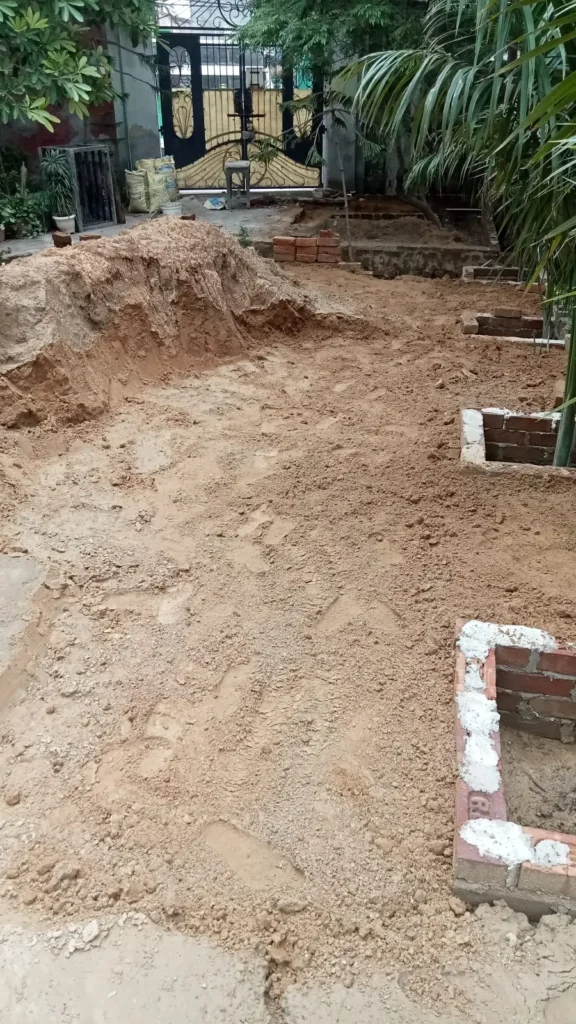
Shaded lawns depend more on soil quality than sunny lawns.
Soil Preparation Checklist
- Loosen soil to 4–6 inches
- Improve drainage using compost or sand
- Maintain pH between 6.0–7.0
- Add organic matter for root strength
- Reduce compaction, especially near trees
Tree roots compete heavily for nutrients, so aeration is critical in shaded zones.
Watering Grass Without Direct Sunlight
Shaded grass needs less water, not more.
Best practices:
- Water deeply but infrequently
- Always water early morning
- Avoid daily light watering
- Ensure water does not stagnate
⚠️ Overwatering in shade is the biggest cause of lawn diseases.
Fertilizing Shaded Lawns Correctly
Grass grows slower in shade, so fertilizer must be controlled.
Recommended approach:
- Use slow-release fertilizers
- Reduce nitrogen by 20–30% vs sunny lawns
- Add organic compost once or twice a year
Balanced nutrition improves color without forcing weak growth.
Mowing Techniques for Low-Light Lawns
Shaded grass should be kept slightly taller.
Best mowing rules:
- Increase height by 0.5–1 inch
- Never cut more than 30% of blade length
- Always use sharp blades
Taller blades capture more light and improve photosynthesis.
Managing Tree Shade for Better Grass Growth
Small changes in tree management make a big difference.
Effective actions:
- Prune lower branches
- Thin dense canopies
- Remove dead limbs
📌 Even one extra hour of filtered light can noticeably improve lawn density.
Common Problems in Lawns Without Direct Sunlight
1. Thin or Patchy Grass
Solved by overseeding with shade-tolerant varieties.
2. Moss Growth
Caused by excess moisture and compaction. Fix with aeration and drainage.
3. Fungal Diseases
Controlled by reducing water, improving airflow, and avoiding excess nitrogen.
4. Weak Roots
Improved with organic matter and correct mowing height.
Is Artificial Lighting a Practical Solution?
Artificial grow lights are:
- Expensive
- Impractical for large lawns
- High-maintenance
They may work in small decorative zones, but are not a long-term lawn solution. Natural indirect daylight is always better.
Practical Tips for Growing Grass Without Direct Sun
- Choose high shade-tolerant grass
- Prepare soil thoroughly
- Water less, not more
- Raise mowing height
- Reduce foot traffic
- Prune surrounding plants
When combined, these steps produce surprisingly healthy shaded lawns.
Is Partial Shade Sometimes Better Than Full Sun?
Yes—especially in very hot climates.
Partial shade:
- Reduces heat stress
- Lowers water evaporation
- Prevents leaf scorching
The goal is balanced light, not full darkness.
Final Verdict: Can Lawn Grass Grow Without Direct Sunlight?
Yes—if indirect light is available and care is adjusted.
Success depends on:
- Shade-tolerant grass varieties
- Healthy, well-drained soil
- Controlled watering
- Correct mowing and fertilization
- Smart shade management
With the right approach, even low-light areas can support beautiful, soft, green lawns that enhance any landscape.
FAQs
1. Can lawn grass grow with no sunlight at all?
No. Natural lawn grass needs at least some indirect or filtered light. Completely dark areas cannot support grass long-term.
2. Which grass grows best without direct sunlight?
St. Augustine grass and Fine Fescue perform best in low-light conditions, provided they receive 3–4 hours of indirect light.
3. How many hours of light does shaded grass need?
Most shade-tolerant grasses need at least 3–4 hours of filtered or indirect light daily to survive and stay healthy.
4. Should shaded lawns be watered more?
No. Shaded lawns require less water because moisture evaporates slowly. Overwatering increases fungal risk.
5. Why does grass under trees fail?
Grass under trees fails mainly due to root competition, poor drainage, excess watering, and dense shade—not just lack of sunlight.
6. Is artificial turf better for no-sun areas?
Yes. In areas with zero daylight, artificial turf or ground covers are more practical than natural grass.
Last Updated on 1 month ago by Anjali Mehra Ph.D. in Horticulture (Punjab Agricultural University)

Her expertise extends to every phase of natural lawn development—from soil preparation and irrigation planning to seasonal maintenance and eco-friendly pest management. Anjali has successfully managed more than 200 natural grass installation projects across Delhi NCR, including golf courses, farmhouse lawns, school campuses, corporate parks, and rooftop gardens.
At Balaji Nursery, she leads project strategy, natural grass selection, and customer education—ensuring that every lawn is designed to thrive under real-world environmental conditions. Her approach emphasizes sustainable landscaping, weed control, and the long-term health of natural turf systems.
Through her blog and advisory services, Anjali simplifies complex lawn care techniques, empowering homeowners, new gardeners, and professional landscapers with practical insights on growing and maintaining lush, resilient lawns using Indian-adapted grass species.
- Why Birds Dig Lawn Grass & How to Stop It Naturally - March 14, 2026
- Hotel Landscaping Grass Projects in J&K - March 10, 2026
- Lawn Grass Installation in Hilly Areas - March 5, 2026