 by Anjali Mehra Ph.D. in Horticulture (Punjab Agricultural University)
Lawn Grass Lifespan in India – Which Grass Lasts Longest?
A green lawn looks simple. Just grass, right?
But anyone who has owned a lawn in India knows the truth. Some grasses survive years with minimal care, while others give up faster than a New Year’s gym resolution.
So, how long does lawn grass actually last in India?
And more importantly, which grass has the longest lifespan in Indian climate conditions?
Let’s answer this properly—using real horticulture facts, Indian climate logic, and practical ground experience.
Why Lawn Grass Lifespan Matters in India
India does not have “one” climate.
We have heat, humidity, dry spells, heavy monsoons, frost in some regions, and extreme summers in others.
Grass lifespan depends on how well a grass species adapts to:
- Temperature range
- Rainfall patterns
- Soil type
- Foot traffic
- Maintenance level
Choosing the wrong grass means:
- Frequent replacement
- Higher water bills
- Patchy lawns
- More money spent over time
Choosing the right grass means:
- A lawn that lasts 10–25 years or more
- Lower maintenance
- Consistent green cover
Longevity is not about looks. It is about survival.
What Determines Lawn Grass Lifespan?
Before comparing grass types, let’s understand the real factors that decide how long lawn grass survives in India.
1. Climate Adaptability
Grass that matches the local climate lasts longer.
Warm-season grasses naturally perform better in most Indian regions.
2. Root System Strength
Deeper roots = better water absorption = longer lifespan.
3. Wear Tolerance
Lawns face walking, kids playing, pets, and garden work. Some grasses recover faster.
4. Maintenance Level
Low-maintenance grasses live longer for regular homeowners.
5. Pest and Disease Resistance
Grass resistant to fungal infections and insects stays healthy for years.
These factors matter more than marketing claims.
Warm-Season vs Cool-Season Grasses in India
India mostly favors warm-season grasses.
Cool-season grasses struggle due to:
- High summer temperatures
- Humidity
- Monsoon stress
Warm-season grasses grow actively between 25°C and 40°C, which suits most Indian regions.
That is why lawns in India usually use:
- Doob grass
- Bermuda grass
- Korean grass
- Zoysia varieties
- Carpet grass
Lawn Grass Types in India and Their Lifespan
Let’s break this down honestly.
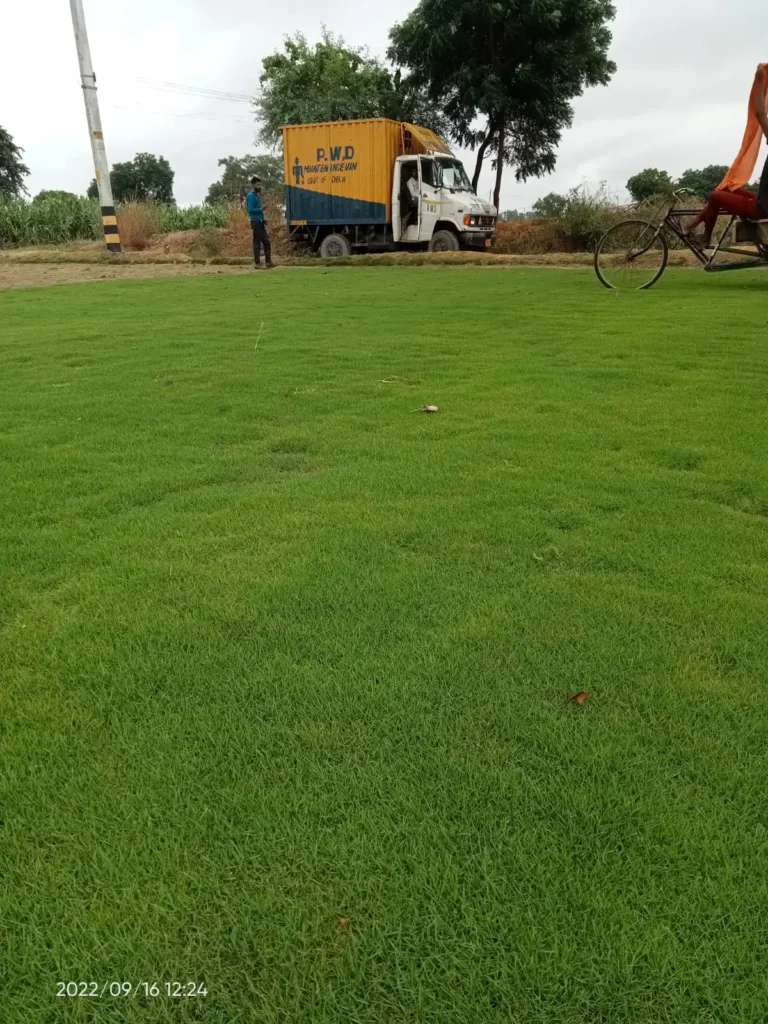
1. Doob Grass (Cynodon dactylon)
Average lifespan: 15–25 years
Maintenance: Low
Climate suitability: Excellent across India
Doob grass is India’s most reliable survivor.
It grows naturally in fields, roadsides, parks, and playgrounds. That alone tells you something.
Why does it last so long?
- Strong runners (stolons)
- Deep root system
- Excellent heat tolerance
- Recovers fast from damage
Even if neglected, Doob grass refuses to die easily.
Best for:
Homes, parks, playgrounds, temples, public lawns
Trusted sources:
ICAR, Indian Journal of Agronomy, FAO warm-season turf studies
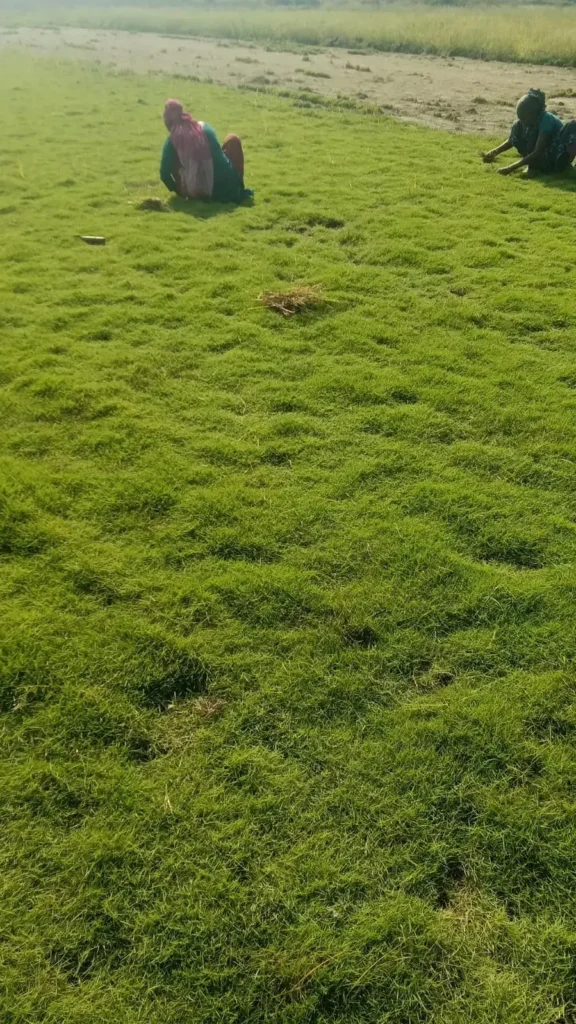
2. Bermuda Grass (Hybrid varieties)
Average lifespan: 10–20 years
Maintenance: Medium
Climate suitability: Very good
Bermuda grass is often confused with Doob grass.
Technically, Doob is a natural Bermuda type.
Hybrid Bermudas offer:
- Faster growth
- Finer texture
- Better uniformity
However, hybrids need:
- Regular mowing
- Balanced fertilization
Neglect shortens lifespan.
Best for:
Lawns requiring a neat appearance with durability
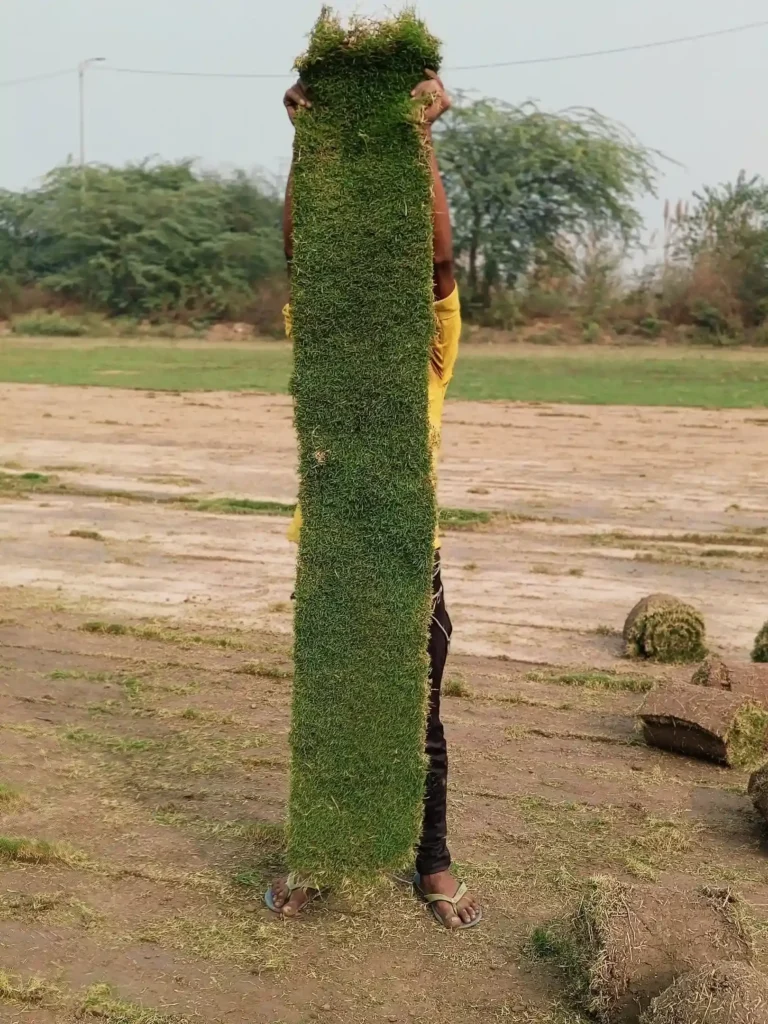
3. Korean Lawn Grass (Zoysia japonica)
Average lifespan: 12–20 years
Maintenance: Medium
Climate suitability: Best in moderate climates
Korean grass is popular for its:
- Dense carpet-like look
- Slow growth
- Soft texture
It lasts long when planted in suitable regions.
Best regions in India:
- South India
- Coastal areas
- Moderate temperature zones
It struggles in:
- Extreme heat zones
- Very dry regions
Proper soil preparation and drainage extend its life.
Trusted sources:
University turf studies on Zoysia species, horticulture department guidelines
4. Carpet Grass (Axonopus compressus)
Average lifespan: 8–15 years
Maintenance: Low
Climate suitability: Humid regions
Carpet grass grows well in:
- Coastal India
- High rainfall zones
- Partial shade areas
It does not tolerate heavy foot traffic well.
Its lifespan reduces if:
- Soil drainage is poor
- Lawn faces constant walking
Best for:
Decorative lawns, low-traffic gardens
5. Buffalo Grass (Stenotaphrum secundatum)
Average lifespan: 10–15 years
Maintenance: Low to medium
Climate suitability: Warm, humid regions
Buffalo grass handles shade better than most grasses.
However:
- It spreads slower
- Recovery from damage takes time
It survives well with minimal mowing.
Which Lawn Grass Lasts the Longest in India?
Let’s be clear and logical.
🥇 Longest-lasting grass in India: Doob Grass
Reasons:
- Native adaptability
- Extreme heat tolerance
- Minimal water requirement
- High disease resistance
If longevity is your top priority, Doob grass wins.
🥈 Second longest: Korean Grass (in suitable climates)
When planted correctly and maintained properly, Korean grass offers long life with premium appearance.
Lawn Grass Lifespan Comparison Table
| Grass Type | Avg Lifespan | Maintenance | Best Climate |
|---|---|---|---|
| Doob Grass | 15–25 yrs | Low | All India |
| Bermuda Hybrid | 10–20 yrs | Medium | Warm regions |
| Korean Grass | 12–20 yrs | Moderate | Mild climates |
| Carpet Grass | 8–15 yrs | Low | Humid zones |
| Buffalo Grass | 10–15 yrs | Low | Shade + warmth |
How to Increase Lawn Grass Lifespan in India
Even the best grass needs care.
Luckily, it doesn’t need expensive tricks.
1. Soil Preparation Matters
Loose, well-drained soil increases root life.
2. Avoid Overwatering
Most lawn deaths happen due to excess water, not shortage.
3. Mow Smartly
Never remove more than one-third of grass height at once.
4. Seasonal Feeding
Use organic compost or balanced fertilizer twice a year.
5. Drainage Is Non-Negotiable
Standing water shortens grass lifespan drastically.
Common Myths About Lawn Grass Longevity
❌ “Expensive grass lasts longer.”
Price does not decide lifespan. Adaptability does.
❌ “More water means a greener lawn.”
Overwatering kills roots and invites fungus.
❌ “Imported grass is better.”
Indian climate favors grasses adapted to Indian conditions.
Logic beats labels every time.
Lawn Grass Lifespan and Indian Climate Zones
India’s climate diversity changes outcomes.
- North India plains: Doob, Bermuda, Korean (moderate success)
- Central India: Doob performs best
- South India: Korean and Zoysia thrive
- Coastal regions: Carpet grass, Korean grass
- Dry zones: Doob grass only practical choice
Matching grass to region extends life automatically.
Trusted Sources and References
This article follows data and insights from:
- Indian Council of Agricultural Research (ICAR)
- FAO Turfgrass Management Studies
- University-based turfgrass research on Zoysia and Bermuda
- State horticulture department guidelines
- Practical Indian nursery and field experience
No random claims. No fake numbers.
Final Verdict: Choose Smart, Not Fancy
If your goal is:
- Maximum lifespan: Choose Doob grass
- Balance of beauty and durability: Choose Korean grass
- Low maintenance decorative lawn: Carpet grass
A lawn should outlast trends, not follow them.
Choose grass that understands Indian weather better than we do—and your lawn will stay green for years, not months.
Last Updated on 1 month ago by Anjali Mehra Ph.D. in Horticulture (Punjab Agricultural University)

Her expertise extends to every phase of natural lawn development—from soil preparation and irrigation planning to seasonal maintenance and eco-friendly pest management. Anjali has successfully managed more than 200 natural grass installation projects across Delhi NCR, including golf courses, farmhouse lawns, school campuses, corporate parks, and rooftop gardens.
At Balaji Nursery, she leads project strategy, natural grass selection, and customer education—ensuring that every lawn is designed to thrive under real-world environmental conditions. Her approach emphasizes sustainable landscaping, weed control, and the long-term health of natural turf systems.
Through her blog and advisory services, Anjali simplifies complex lawn care techniques, empowering homeowners, new gardeners, and professional landscapers with practical insights on growing and maintaining lush, resilient lawns using Indian-adapted grass species.
- Why Birds Dig Lawn Grass & How to Stop It Naturally - March 14, 2026
- Hotel Landscaping Grass Projects in J&K - March 10, 2026
- Lawn Grass Installation in Hilly Areas - March 5, 2026