 by Balaji Nursery Editorial Team
Cow dung, vermicompost or chemical fertilizer: which one does your lawn actually need?
Ask five gardeners this question and you’ll get five different answers. Your grandfather swears by cow dung. The nursery guy pushes DAP. Your neighbour read somewhere that vermicompost is the best thing ever.
They’re all partly right. And partly wrong. Because each option does different things to your soil, your grass and your wallet.
This guide puts all three side by side. Same lawn, same grass, same conditions. What each one delivers, where it falls short and which combination actually gives the best results.
What nutrients does each one bring to the table?
Lawn grass primarily needs three nutrients: nitrogen (N) for leaf growth and green colour, phosphorus (P) for root development and potassium (K) for stress resistance and disease tolerance.
Cow dung manure (decomposed) contains roughly 0.5 to 1% nitrogen, 0.2 to 0.5% phosphorus and 0.5 to 1% potassium. The numbers are low compared to chemical options, but cow dung also delivers organic carbon, micronutrients (zinc, manganese, iron, copper) and billions of soil microbes that no synthetic product can match.
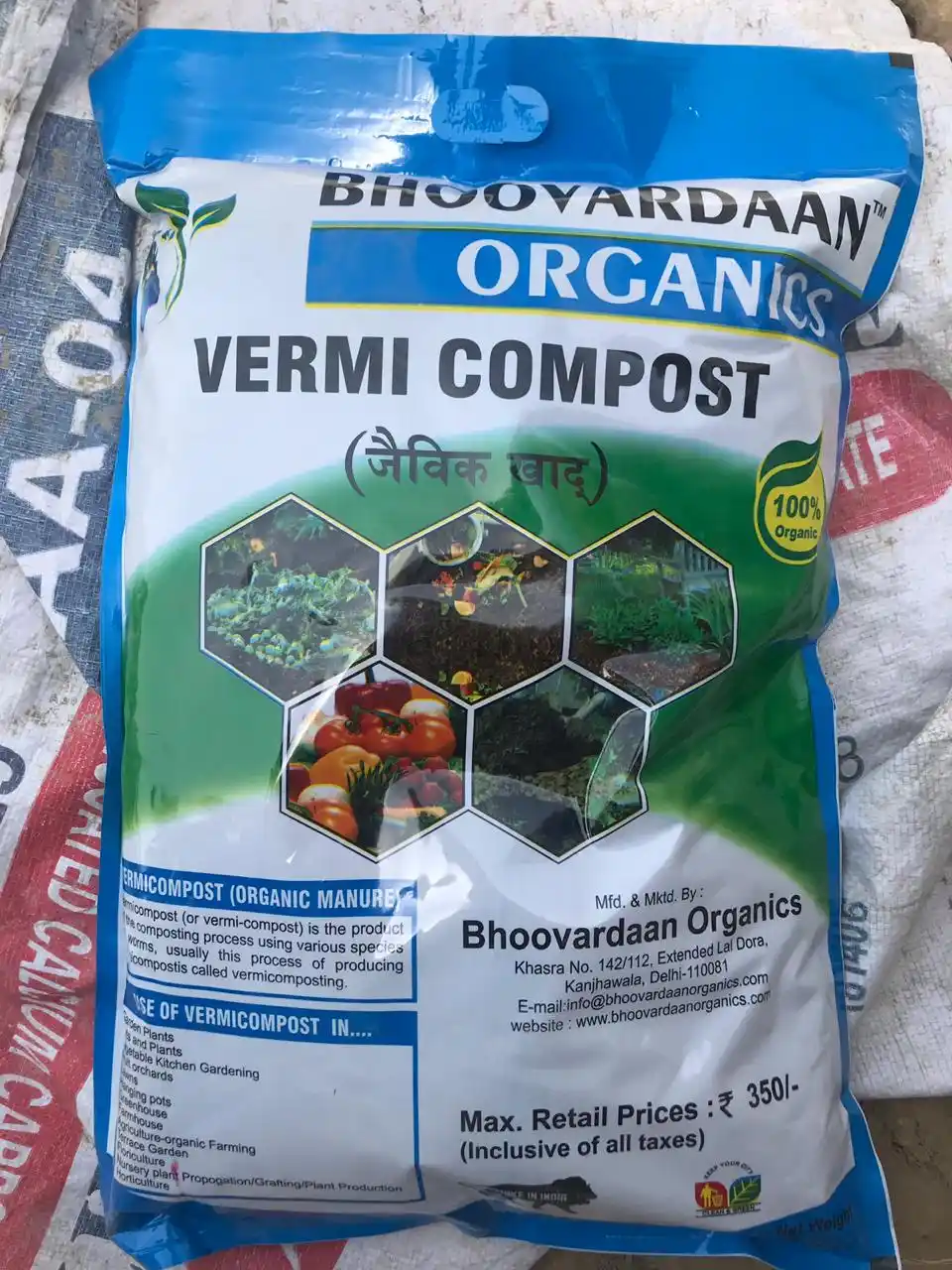
Vermicompost is richer: about 1.5 to 2.5% nitrogen, 1 to 1.5% phosphorus and 1 to 1.5% potassium. Plus humic acids, plant growth hormones and enzyme activity 10 to 20 times higher than regular soil. It’s the most nutrient dense organic option available.
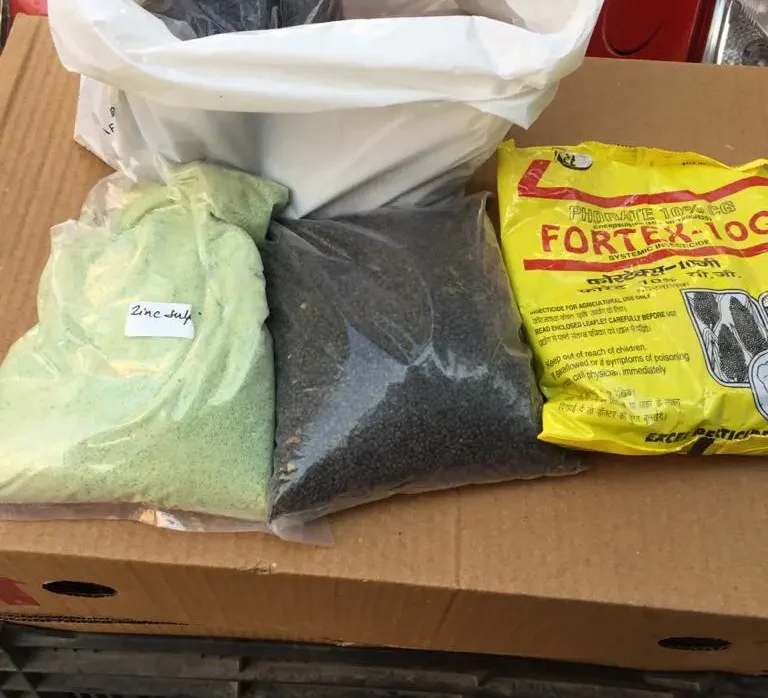
Chemical fertilizer (DAP) delivers 18% nitrogen and 46% phosphorus in a single bag. NPK blends (like 10:26:26 or 20:20:20) give you customisable ratios. The numbers are dramatically higher per kg than any organic option.
So if we’re only looking at NPK per kilogram, chemicals win by a huge margin. But nutrients are only one part of the story. What each option does to the soil itself is where the comparison gets interesting.
What does each one do to your soil over time?
This is where organic and chemical options separate completely.
Cow dung manure adds bulk organic matter. Over 2 to 3 seasons of regular application, hard clay soil starts breaking up. Sandy soil starts holding water. Earthworm populations increase. The soil becomes alive in a way that supports grass roots year after year. It’s slow but permanent improvement.
Vermicompost does everything cow dung does but faster and more intensely. The microbial load in vermicompost colonises the root zone quickly. Beneficial fungi form partnerships with grass roots (mycorrhiza) that help the plant access nutrients and water from a wider area. Soil aggregation improves within one season. Water infiltration increases. Root depth increases. You’re building a better soil ecosystem.
Chemical fertilizer adds nutrients but nothing else. No organic matter. No microbes. No structural improvement. After 3 to 4 years of chemical only feeding, soil organic carbon drops. The soil compacts. Earthworms disappear. Salt buildup occurs (especially with DAP and urea). The lawn becomes dependent on the next chemical dose to stay green. Remove the chemicals and the grass struggles because the soil can’t support it on its own.
Think of it this way: chemical fertilizer is like an energy drink. It gives a quick boost but doesn’t build health. Organic manure is like a proper meal. Slower, but it builds strength.
Understanding your soil type helps you decide how much organic matter your lawn actually needs.
How fast do results show for each option?
This is where chemical fertilizers have a clear advantage and why so many people reach for them first.
Chemical fertilizer: 3 to 7 days. Apply DAP or urea on a pale lawn and you’ll see colour change within a week. The grass greens up fast because the nutrients are instantly available in water soluble form. The roots absorb them immediately.
Vermicompost: 2 to 4 weeks. The nutrients in vermicompost release as soil microbes break them down further. You won’t see an overnight colour pop. But by week 3 to 4, the grass looks thicker, denser and a deeper green. And it stays that way for months.
Cow dung manure: 3 to 6 weeks. Even slower than vermicompost because the nutrient concentration is lower. The visible improvement is more gradual. But the soil structure improvement happens simultaneously, which means the grass gets better at feeding itself.
Here’s the catch with chemical speed: the effect fades fast too. Within 3 to 4 weeks, the colour starts dropping again because the nutrients have been used up or leached away. You need another dose. With organics, a single application sustains the lawn for 2 to 4 months.
What does each one cost for the same lawn?
Let’s compare costs for a standard 1,000 sq ft (roughly 93 sq metre) lawn over one full year.
Vermicompost approach: Two applications per year at 1.5 kg per sq metre. That’s 140 kg per application, 280 kg per year. At Rs 960 per 50 kg bag, that’s 6 bags = Rs 5,760 per year.
Cow dung manure approach: Four applications per year at 0.5 kg per sq metre. That’s 47 kg per application, 188 kg per year. At Rs 30 per kg = Rs 5,640 per year.
Chemical fertilizer approach: Six applications per year (every 6 to 8 weeks during growing season) at 50 grams per sq metre. That’s about 4.5 kg per application, 27 kg per year. DAP at Rs 30 to Rs 40 per kg = Rs 800 to Rs 1,100 per year.
Combined approach (recommended): Vermicompost twice a year (Rs 5,760) plus cow dung manure twice for maintenance (Rs 2,820) plus one chemical dose for a quick monsoon boost (Rs 150). Total: roughly Rs 8,730 per year.
On paper, chemicals are 5 to 6 times cheaper per year. But factor in what chemical only feeding does to your soil after 3 years (compaction, salt buildup, declining health) and the cost of reversing that damage (soil replacement, heavy organic treatment, sometimes re-laying the entire lawn), and the organic approach is cheaper in the long run.
For detailed rates and bulk ordering, the organic manure buying guide has the full breakdown.
Is there a risk of damaging your lawn with any of these?
Chemical fertilizer: Yes. Significant risk. Over application of urea or DAP causes fertilizer burn. The grass turns brown and dies in patches. This is the most common lawn damage mistake in India. Even a small miscalculation in dosage or uneven spreading can burn spots. Applying in hot weather without adequate watering makes it worse.
Vermicompost: Almost zero risk. You’d have to bury the grass under a 5 cm layer to cause any harm (by blocking light, not by chemical damage). Normal application of 0.5 to 1 cm has no burning risk at all. Over application just means you wasted some product. The grass won’t be harmed.
Cow dung manure (processed): Very low risk. Fully composted cow dung manure is safe for direct application. The only danger is using raw, fresh dung, which contains ammonia and can burn roots. Balaji Nursery’s cow dung manure is fully decomposed and safe.
This safety difference is a big deal for home lawns. If you’re not a professional and you’re doing the feeding yourself, organic options are far more forgiving. You can’t really mess up vermicompost application. You can absolutely mess up DAP.
What about environmental impact?
Chemical fertilizers are manufactured in factories using natural gas and mined phosphate rock. Their production creates carbon emissions. Their use creates nitrate runoff that pollutes groundwater and rivers. Excess phosphorus in waterways causes algal blooms that kill aquatic life.
Vermicompost and cow dung manure are recycled waste products. They turn organic matter that would otherwise decompose and release methane (a potent greenhouse gas) into a useful soil input. Using them reduces waste and builds carbon into the soil instead of releasing it.
For a single home lawn, the environmental difference is small. But across thousands of lawns, parks, sports grounds and institutional campuses, the collective impact is real. This is one reason government green projects increasingly specify organic manure in their maintenance contracts.
So which one should you actually use?
The honest answer: a combination works best. Here’s a practical decision framework.
Use vermicompost as your primary lawn food. Twice a year (pre monsoon and post monsoon), apply 1 to 1.5 kg per sq metre. This builds soil health, feeds the grass steadily and improves the growing conditions season by season.
Use cow dung manure for maintenance top ups. Once every 2 to 3 months between the vermicompost applications. Affordable, safe and keeps the nutrient supply going without gaps.
Use chemical fertilizer only as a rescue tool. If the lawn looks severely pale after prolonged rain or if you need it green fast for an event, a single light dose of DAP or NPK blend gives you a quick result. But don’t make it a habit. Once or twice a year maximum.
Use FYM for new lawns and soil renovation. When preparing soil for a new lawn or fixing a damaged section, mix FYM into the topsoil at 4 to 5 kg per sq metre. It gives the soil the bulk organic matter it needs to support healthy grass from day one.
If your lawn is already established and you’re just maintaining it, the vermicompost plus cow dung manure combination will keep it healthy for years. For a complete lawn maintenance routine that includes feeding, mowing, watering and pest control, this guide covers it all.
What happens if you switch from chemical to organic?
If your lawn has been on chemicals for years, expect a transition period.
Month 1 to 2: The lawn may look slightly less vibrant than it did on chemicals. This is normal. The grass is adjusting from instant synthetic feeding to slower organic nutrition. Don’t panic and reach for the urea bag.
Month 3 to 4: Soil microbes start rebuilding. Earthworms begin returning (if they were gone). You may notice the soil feels softer when you walk on the lawn. Water stops pooling after rain because infiltration is improving.
Month 6 to 8: The grass colour stabilises and starts looking richer, not the bright artificial green of chemical feeding but a deeper, natural green. The blades feel thicker. The turf feels denser underfoot.
Year 2: The soil has fundamentally improved. Organic carbon is higher. Root depth has increased. The lawn survives dry spells and heat better because the soil holds moisture and the roots go deeper. You’re spending less time worrying about the lawn and more time enjoying it.
Combining regular aeration with organic manure application speeds up this transition. Aerate first, then apply vermicompost. The nutrients go straight into the root zone through the holes.
Where do you get the right organic manure for your lawn?
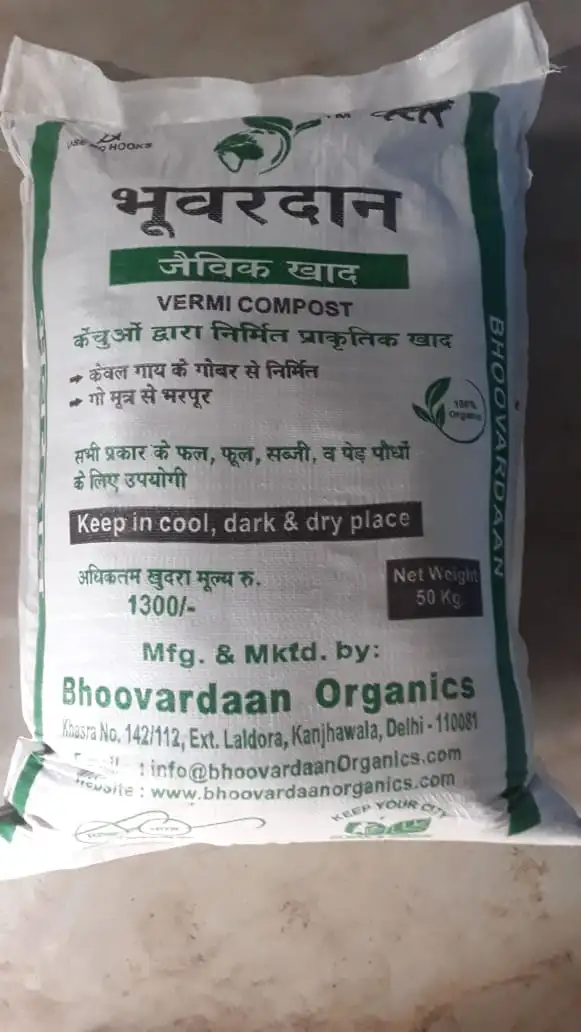
Balaji Nursery manufactures and supplies vermicompost, FYM and cow dung manure. All products are 100% organic, fully processed and safe for direct lawn application.
Vermicompost and FYM are available at Rs 960 per 50 kg bag. Cow dung manure costs Rs 30 per kg. Minimum order is 500 kg.
They also supply natural lawn grass, so if you’re setting up a new lawn and want the grass and the organic soil preparation done together, one call handles both.
Call 8766234417 or 9354173113. Tell them your lawn size, current soil condition and what you’ve been using so far. Their team will recommend the right product mix and quantity for your specific situation.
Last Updated on 2 months ago by Balaji Nursery Editorial Team

- How do you pick the right planter size so your plant actually thrives? - October 10, 2026
- Tulsi Plant Direction as per Vastu: Where to Keep It at Home - October 3, 2026
- Which garden planter is right for your home, balcony or terrace? - October 1, 2026