
Choosing the Right Grass for Your Garden Lawn
When it comes to creating a lush and inviting garden, selecting the right type of grass is crucial. In this guide, we’ll walk you through the various grass options commonly used in gardens, helping you make an informed choice for your outdoor oasis. This guide also helps homeowners and landscapers understand which garden grass options are commonly selected for lawn installation projects.
Common Garden Grass Types
1. Kentucky Bluegrass
Kentucky Bluegrass is a popular choice for its fine texture and rich green color. It thrives in cool climates and creates a beautiful, dense lawn.
2. Bermuda Grass
Bermuda grass is known for its excellent heat and drought tolerance. It’s a perfect choice for warm climates, providing a resilient and vibrant lawn.
3. Fescue Grass
Fescue grass is adaptable and can handle both shade and sun. It’s a versatile option, known for its low maintenance and lush appearance.
4. Zoysia Grass
Zoysia grass offers a dense, luxurious lawn. It’s a favorite for its durability and ability to withstand heavy foot traffic.
Factors to Consider
1. Climate
Choose a grass type that thrives in your climate – whether it’s cool, warm, or a mix of both.
2. Sun Exposure
Consider the amount of sunlight your garden receives. Some grasses prefer full sun, while others can thrive in shade.
3. Maintenance
Think about the level of maintenance you’re willing to commit to. Some grasses are low-maintenance, while others may require more care.
Caring for Your Garden Grass
1. Regular Watering
Ensure your garden grass gets enough water, especially during dry spells, to keep it green and healthy.
2. Mowing and Trimming
Follow a regular mowing schedule to maintain the desired height for your grass type.
Contact Us for Garden Grass Advice
The right choice of grass can turn your garden into a green paradise. Each type of grass has its unique characteristics, so consider your climate, sun exposure, and maintenance preferences when making your selection. If you need more guidance, reach out to us today to find the perfect grass for your garden! We are offering Natural Green Grass Carpet to our clients. We are an experienced manufacturer and supplier of natural grass carpet, lawn grass carpet, garden grass, Mexican grass carpet, playground grass, and stadium grass to suppliers with project-based delivery support across India.
Buy Natural Grass Carpet Rolls online, and delivery timelines are based on location and availability. Our team also provides guidance on grass selection, quantity estimation, and installation suitability.
Call 9354173113 / 8766234417 for guidance, availability, and pricing. Our team assists with grass selection, quantity estimation, and installation suitability based on project needs.
We offer several types of natural grass for garden and lawn projects, with availability depending on location and project requirements, including Korean grass, Selection No. 1 grass, Bermuda grass, Mexican grass, and other natural lawn grass suitable for landscaping and horticulture development.
We can supply a wide variety of lawn materials in the form of
- Ready to use lawn slabs or
- Loose lawn packed in bags to be planted by the dibbling method
Lawn varieties available are
Varieties that do best in full sun
- Korean Carpet lawn – available as ready lawn slabs
- Selection No. 1 – available loose in bags
Varieties that can do best in semi-shade
- Paspalum lawn – available loose in bags
- St. Augustine Lawn – available loose in bags
Natural grass has long played an important role in creating greener communities. There are environmental and personal benefits hiding in your landscape that a natural grass lawn can provide to you.
Here are just 10 of the amazing ways an all-natural lawn is the right choice for you, so you can be sure you’re always getting the most out of your property, without compromising quality:
- Natural grass lawns filter rainwater and runoff for cleaner groundwater.
- Choosing natural grass can noticeably reduce the urban heat island effect.
- Natural grass helps to prevent and control soil erosion.
- Natural grass absorbs sulfur dioxide from car emissions.
- Lawns made of natural grass can decrease neighborhood noise by 8 to 10 decibels by absorbing and deflecting sounds.
- A natural grass surface can be 10-14°F cooler than concrete and is much cooler than artificial turf or bare soil.
- A 2,500 square ft. natural grass lawn can release enough oxygen for a family of 4.
- Natural grass lawns help to sequester carbon, cleaning the air we breathe.
- Natural grass plays a big role in reducing your summer energy costs by reducing your air conditioner’s workload, saving you money on your electricity bill!
- Natural grass lawns are aesthetically pleasing and increase your home’s curb appeal and property value.
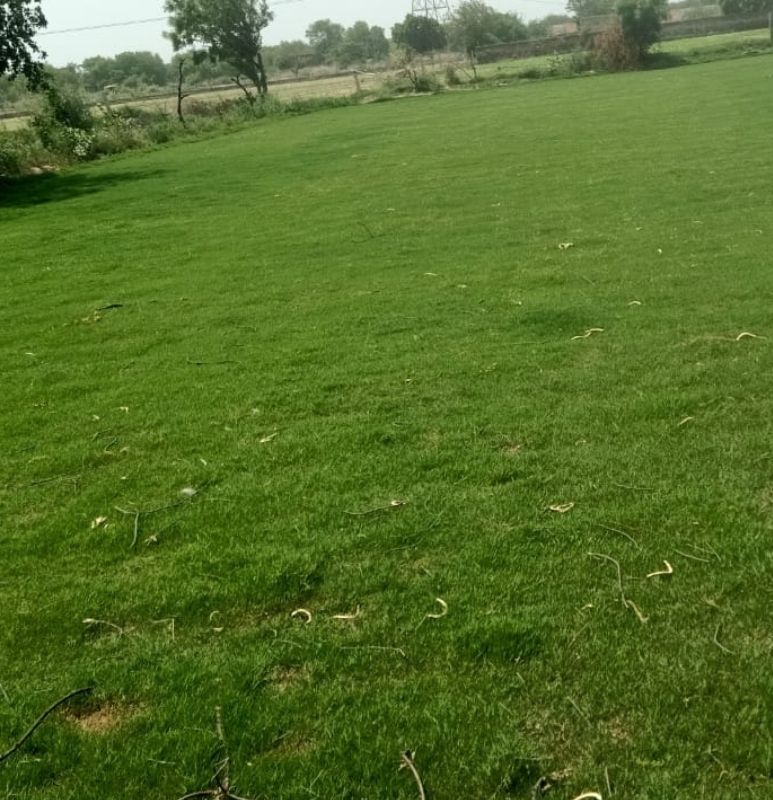
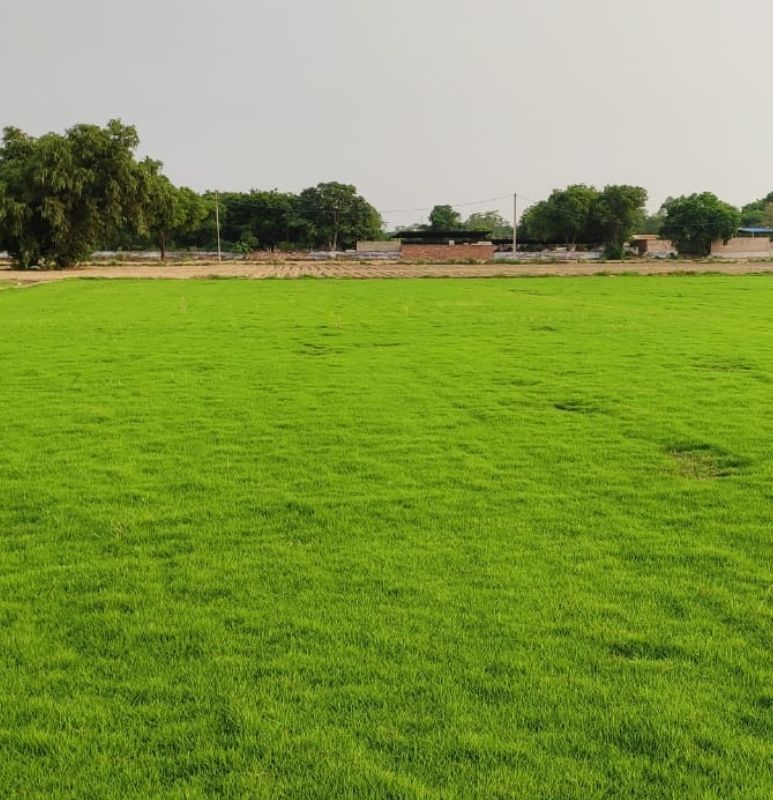
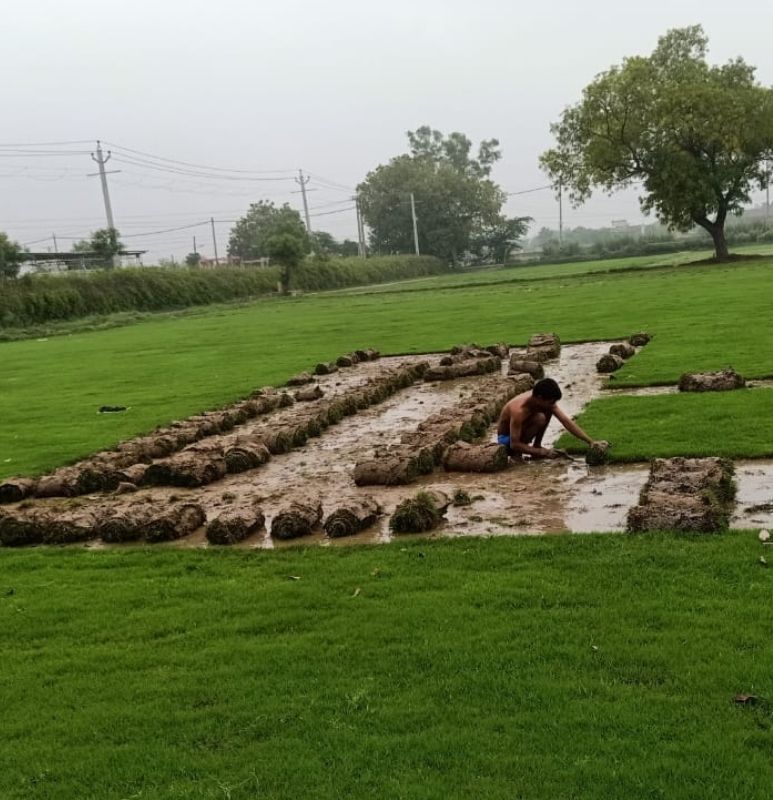
Bermuda grass is a perennial lawn or turf grass grown as forage. It is one of the most popular of the warm season grass. It can easily be grown from seeds.
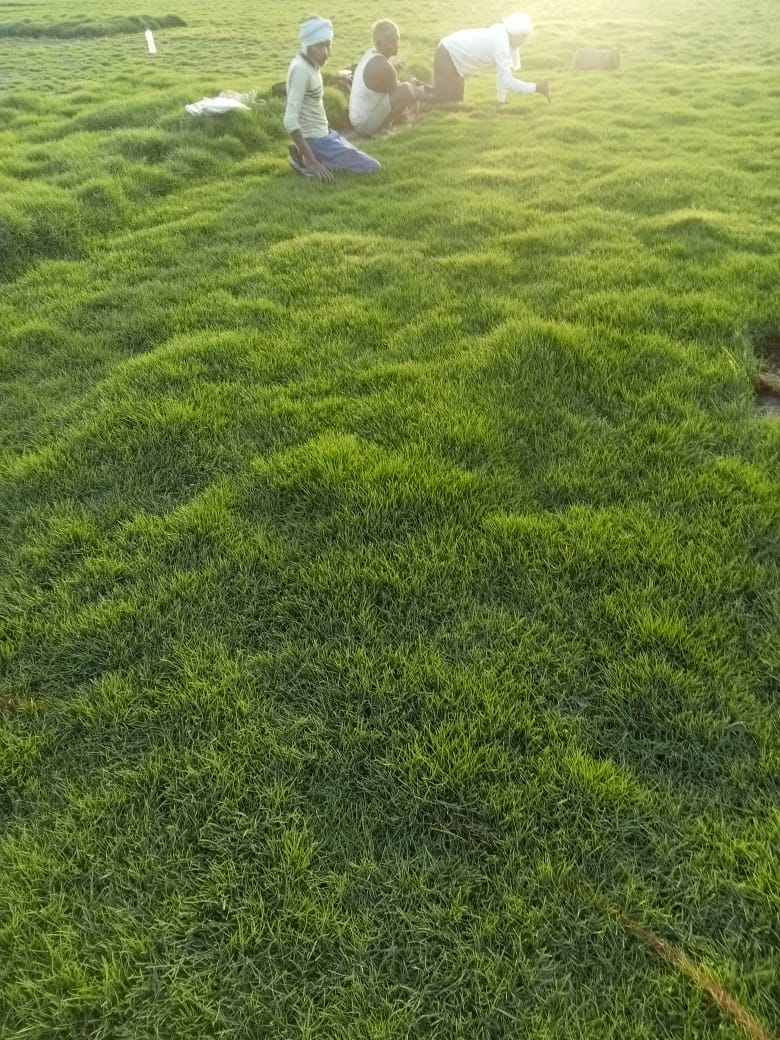
Seeds Specifications
| Common Name | Villa Stella, Bermuda grass, Dhoob, Dhurva grass, Dubo, Dogs tooth grass, Bahama grass, Devils grass, Couch grass, Indian doab, Arugampul, Grama, Wiregrass, and Scutch grass. |
| Height | 1-2 inches |
| Difficulty Level | Easy to grow. |
Planting And Care
- Bermuda grass care is not difficult
- Light daily watering is all that is necessary while the grass is establishing
- Once the grass is established, the watering frequency can be decreased, but the amount of water per watering session can be increased
- As soon as the grass reaches 2 inches, it can be mowed with a sharp blade
- Mowing will help the grass toughen up and spread
- Once a year, rake the lawn before the rain and top dress with a rich mixture of decomposed manure and soil
- This will accelerate the grass with new vigorous growth
- Fertilize six weeks after planting with a complete fertilizer that releases nitrogen slowly
Bermuda Grass Care
- You can grow lawn grass by two methods: direct sowing and raising nursery plants
- The best time for planting Bermuda grass seed is in late spring or early summer
- In ideal conditions, Bermuda seeds can germinate in seven to ten days and can fully grow as grass within 60 to 90 days
- If conditions are not ideal, it may take a longer time
- During germination, Bermuda grass needs a lot of water, and the soil needs to always be kept moist
- Use 1 – 1.3kg of seed per 1000 square feet
- Start by raking the area to be seeded until it is as smooth as possible
- Make a mixture of equal parts of sand and seed
- The seed can be broadcast by hand to smaller areas
- To avoid skips on the lawn, distribute half the mixture lengthwise and half of the mixture crosswise
| Sunlight | Full sunlight |
| Watering | Water once or twice a week, maximum |
| Soil | Best in sandy clay or soils that will crumble in your hand when squeezed. |
| Temperature | 15 degrees and above |
| Fertilizer | Fertilize six weeks after planting with a complete fertilizer that releases nitrogen slowly. |
Bermuda Grass Special Feature
Best for lawns and sports grounds.
Bermuda Grass Uses
Ornamental Use:
- Bermuda grass is planted for beautiful and durable grass lawns
Last Updated on 2 months ago by Anjali Mehra Ph.D. in Horticulture (Punjab Agricultural University)

Her expertise extends to every phase of natural lawn development—from soil preparation and irrigation planning to seasonal maintenance and eco-friendly pest management. Anjali has successfully managed more than 200 natural grass installation projects across Delhi NCR, including golf courses, farmhouse lawns, school campuses, corporate parks, and rooftop gardens.
At Balaji Nursery, she leads project strategy, natural grass selection, and customer education—ensuring that every lawn is designed to thrive under real-world environmental conditions. Her approach emphasizes sustainable landscaping, weed control, and the long-term health of natural turf systems.
Through her blog and advisory services, Anjali simplifies complex lawn care techniques, empowering homeowners, new gardeners, and professional landscapers with practical insights on growing and maintaining lush, resilient lawns using Indian-adapted grass species.
- Why Birds Dig Lawn Grass & How to Stop It Naturally - March 14, 2026
- Hotel Landscaping Grass Projects in J&K - March 10, 2026
- Lawn Grass Installation in Hilly Areas - March 5, 2026