 by Balaji Nursery Editorial Team
What’s the Difference Between Turf and Seed-Grown Grass? A Practical Comparison Based on 50+ Years of Lawn Installation Experience
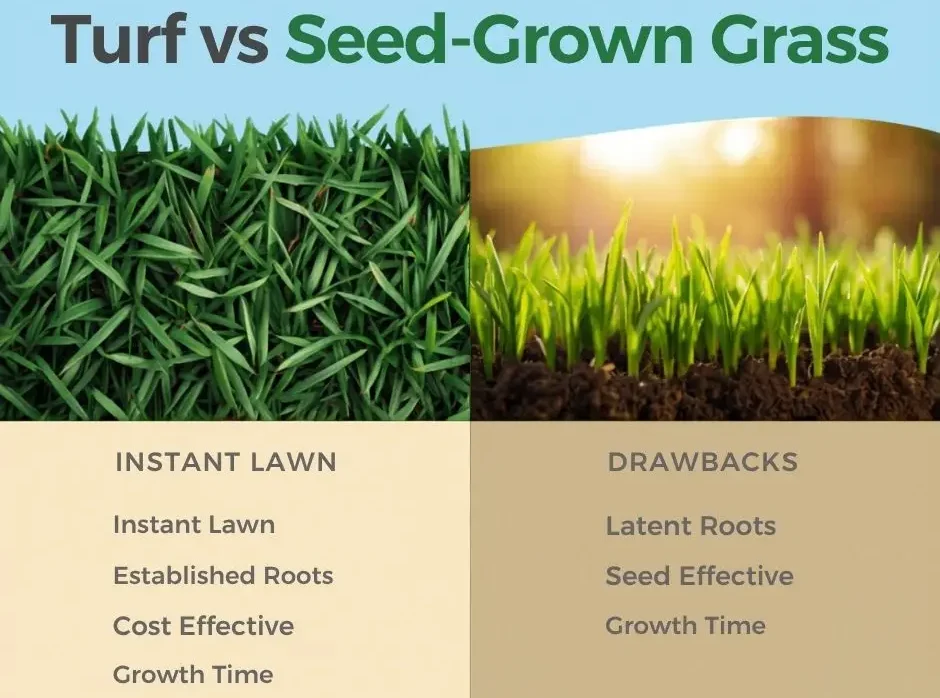
Turf is professionally grown grass harvested with its roots intact and installed like a green carpet — giving immediate coverage, faster usability, lower weed pressure, and more predictable results, making it the preferred choice for most residential, commercial, farmhouse, and institutional projects. Seed-grown grass is cheaper upfront and offers more variety choice, but can take 6–12 months to fully establish and carries a higher risk of failure from poor germination, weed invasion, heavy rain, or inconsistent watering — requiring more expertise and supervision during the first 90 days. A common myth is that turf grows shallower roots than seeded grass — in reality, turf roots continue deepening after installation just like seed-grown grass. For very large or budget-sensitive projects, alternatives like sprigging, dibbling, or hydroseeding can balance cost and reliability. Based on 100,000+ lawn installations across India, Balaji Nursery recommends turf for most projects — call 8766234417 or 9354173113 for a site-specific recommendation.
When planning a new lawn, one of the most common questions property owners ask is:
“Should I choose turf or seed-grown grass?”
Over the last 50+ years, our team at Balaji Nursery has worked on more than 100,000 lawn installation projects across India, ranging from residential gardens and farmhouses to railway projects, botanical gardens, institutional campuses, sports grounds, highways, and commercial landscapes.
Having worked with turfing, hydroseeding, sprigging, and other lawn establishment methods, we’ve learned that the answer is not always straightforward. The right choice depends on your budget, timeline, location, maintenance capabilities, and long-term goals.
In this guide, we’ll explain the real-world differences between turf and seed-grown grass based on practical experience rather than theory.
What Is Turf Grass?
Turf is natural grass that is professionally grown on a turf farm and harvested with its roots and a thin layer of soil attached. It is then transported to the site and installed like a green carpet.
Once installed, the grass continues to grow naturally, develops deeper roots, spreads through runners, and behaves exactly like any other lawn.
What Is Seed-Grown Grass?
Seed-grown grass is established by sowing grass seeds directly into prepared soil. The seeds germinate, develop roots, and gradually form a complete lawn over time.
Depending on the grass variety and growing conditions, establishment can take several months before the lawn becomes fully usable.
Our Experience With Both Methods
At Balaji Nursery, we have completed over 100,000 lawn installations across India.
For high-traffic areas such as:
- Marriage lawns
- School grounds
- Sports facilities
- Farmhouses
- Commercial landscapes
We commonly recommend Bermuda Grass because of its durability and recovery ability.
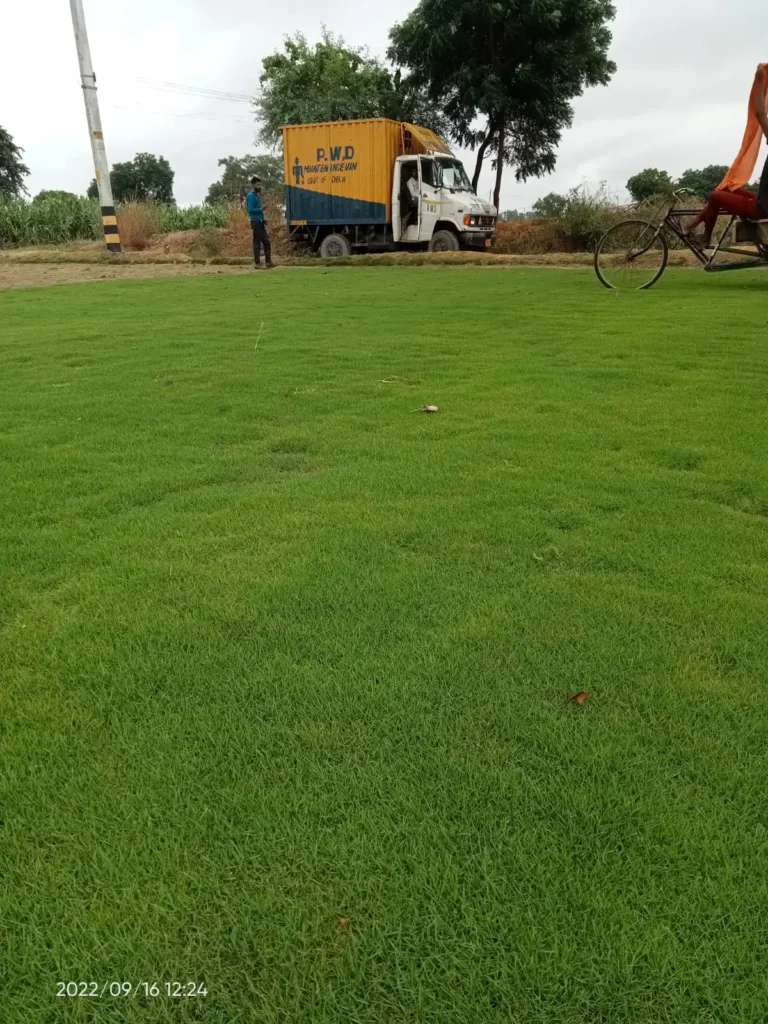
For premium ornamental landscapes where appearance and lower maintenance are priorities, we often install:
- Mexican Grass
- Korean Grass
- Zoysia Grass
Although we do use hydroseeding and seeding methods in specific situations, turf installation remains our preferred solution for most projects because it offers faster and more reliable results.
The Biggest Mistake People Make
Many property owners focus on the installation method before choosing the right grass variety.
In reality, lawn success depends far more on selecting the correct grass species than on whether the lawn is installed through turf or seed.
Factors that should influence grass selection include:
- Sunlight availability
- Shade conditions
- Foot traffic levels
- Soil pH
- Water quality and TDS
- Local climate
- Heat, drought, rainfall, and frost conditions
- Maintenance capabilities
- Availability of gardeners
In our experience, most lawn failures occur because:
- The wrong grass variety was selected.
- The lawn did not receive proper maintenance.
Turf vs Seed: Which Is More Cost-Effective?
Many people assume seed-grown grass is automatically cheaper.
However, real-world projects often tell a different story.
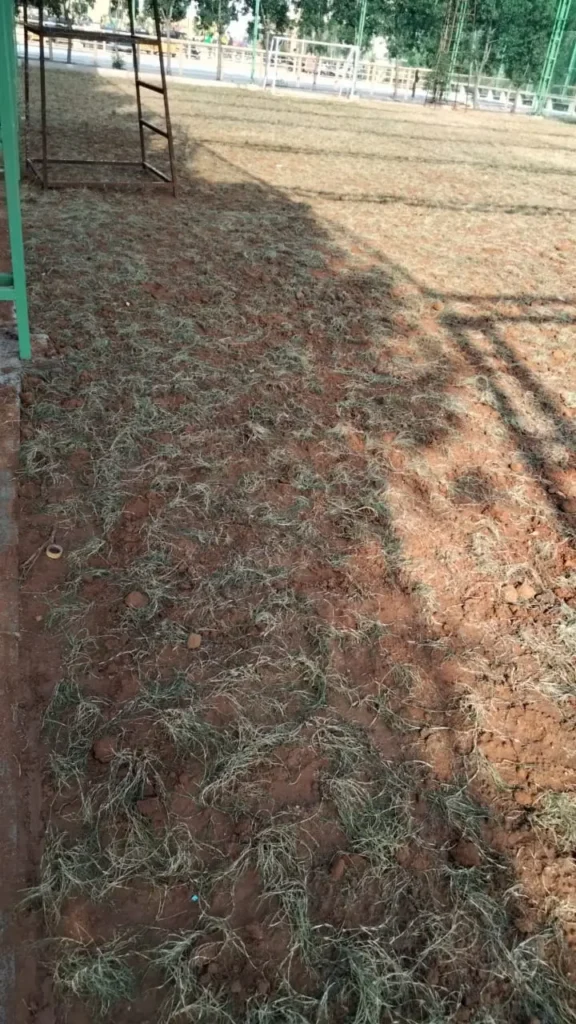
Seed-grown lawns can face challenges such as:
- Poor germination
- Heavy rainfall damage
- Weed infestations
- Uneven establishment
- Delayed project completion
Some grass varieties may require 6 to 12 months to fully establish from seed.
Turf, on the other hand, provides:
- Immediate green coverage
- Faster project completion
- Easier weed management
- More predictable results
- Lower establishment risk
When maintenance, weed control, delays, and failures are considered, turf frequently becomes the more economical solution over the life of the project.
Large-Scale Projects We’ve Worked On
One of the largest landscape developments we have participated in covered approximately 5 million square feet (50 lakh sq ft).
Our projects have included:
- Botanical gardens
- Railway landscaping
- Highway slope greening
- Institutional campuses
- Industrial developments
- Government infrastructure projects
These projects have been completed across:
- Delhi
- Punjab
- Uttar Pradesh
- Madhya Pradesh
- Gujarat
- Pune
- Bengaluru
- Hyderabad
- Chennai
- Kerala
For extremely large areas, we often use sprigging methods instead of full turfing or direct seeding because sprigging offers an excellent balance between cost and establishment speed.
When Seed-Grown Grass Makes More Sense
Although we generally prefer turf, there are situations where seeding or hydroseeding can be the better option.
These include:
- Steep hill slopes
- Remote locations
- Large government projects
- Massive land areas
- Budget-sensitive developments
- Sites where professional supervision is available
In such environments, hydroseeding, direct seeding, or sprigging can significantly reduce costs while still producing successful results.
Maintenance During the First 90 Days
The first three months are critical for any lawn.
Turf Installation
During establishment, turf requires:
- Regular watering
- Fertilizer management
- Mowing
- Monitoring for fungal diseases
Occasional issues may include:
- Yellowing
- Browning
- Chlorosis
- Leaf mold
- Fungal infections
However, weed pressure is generally lower.
Seed-Grown Grass
Seed-grown lawns require substantially more supervision.
Common challenges include:
- Germination monitoring
- Intensive weed control
- Irrigation management
- Fertilizer timing
- Weather-related failures
Heavy rain, extreme heat, poor supervision, or inconsistent watering can significantly reduce establishment success.
In our experience, seeded lawns require more expertise and carry a higher risk of failure during the first 90 days.
Three Common Myths About Turf and Seed-Grown Grass
Myth #1: Seed-Grown Grass Develops Deeper Roots
Not true.
Turf is living grass. After installation, its roots continue growing deeper into the soil just like seed-grown grass.
Myth #2: Turf Dies Faster
Also false.
When properly maintained, turf can remain healthy for many years. Most failures occur because of poor maintenance or improper grass selection—not because turf was used.
Myth #3: Turf Is Fake Grass
Natural turf is simply mature grass grown on a farm and transplanted to your site.
It grows, spreads, develops roots, and requires mowing exactly like any naturally established lawn.
A Real Success Story From Punjab
One memorable project involved a farmhouse development in Punjab covering approximately 70,000–80,000 square feet.
The client was unsure whether to use turf or seeding.
After evaluating the site, we recommended Bermuda Grass through turf installation because:
- The property would receive regular traffic.
- The client wanted reliable and faster results.
- Bermuda Grass performs exceptionally well in North Indian conditions.
The results were excellent.
The lawn established quickly, handled regular use, tolerated high temperatures, recovered from wear and tear, and maintained an attractive appearance over time.
Because Bermuda Grass spreads through runners, it continuously repaired weak areas and maintained dense coverage.
What We Recommend to Most Customers
If You Need Fast Results
Choose turf.
Turf provides immediate greenery, faster usability, and more predictable outcomes.
If Budget Is the Primary Concern
For very large projects, consider:
- Sprigging
- Dibbling
- Hydroseeding
- Direct seeding
These methods can reduce installation costs while still delivering acceptable long-term performance.
Final Verdict: Turf or Seed-Grown Grass?
The answer depends on:
- Budget
- Timeline
- Climate
- Soil conditions
- Water quality
- Maintenance capabilities
- Intended usage
Every project should be evaluated individually.
However, based on decades of practical experience and more than 100,000 successful lawn installations, we find that turf installation is usually the best option for most residential, commercial, institutional, and farmhouse projects.
It offers:
- Faster establishment
- Better visual impact
- Lower risk
- Easier management
- Higher reliability
Seed-grown lawns certainly have their place, especially in large-scale or specialized projects, but for most property owners seeking dependable results, turf remains the preferred choice.
The most important lesson is simple: don’t choose based on price alone. Choose the solution that best matches your site’s climate, soil, water quality, maintenance resources, and long-term goals.
Last Updated on 3 months ago by Balaji Nursery Editorial Team

- How does vetiver protect roads, rivers and hillsides? - September 19, 2026
- Should you grow your lawn from seed or lay sod rolls? - September 11, 2026
- How do you grow a lawn from seeds if you have never done it before? - September 7, 2026