 by Balaji Nursery Editorial Team
Bermuda Grass India: Uses, Benefits and Care
What is Bermuda grass and why does it survive Indian summers?
You have probably walked on it without knowing its name. Cricket grounds, football fields, roadside dividers. That thick, dark green carpet that stays green even in peak May heat? Good chance it is Bermuda grass.
Bermuda grass in India has become the go-to choice for people who want a lawn that just works. No constant babysitting, no wilting the moment the water supply gets delayed by a day.
This guide covers everything. What Bermuda grass is, why it survives so well, how to grow it, and where to buy quality Bermuda grass in India.
What exactly is Bermuda grass?
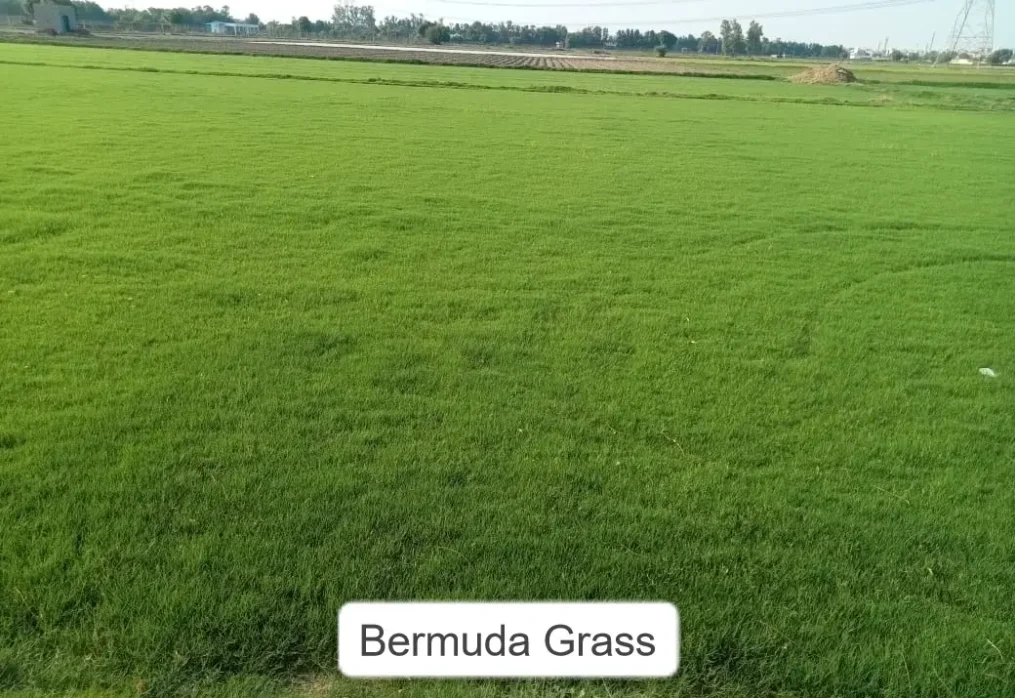
Bermuda grass is a warm-season grass. It grows low, dense, and spreads fast. The blades are fine to medium, dark green in colour.
Unlike vetiver, Bermuda does not stay in a clump. It spreads sideways using both runners above the soil and rhizomes below it. That is exactly why it fills up a lawn so quickly.
It handles full sun without any trouble. Actually, the more sun it gets, the better it performs.
Why is Bermuda grass so popular for Indian lawns?
Three reasons. Speed, toughness, and looks.
It grows fast. Once established, Bermuda grass can cover bare patches in weeks, not months. That is why it is the first choice for anyone in a hurry to get a green lawn.
It is drought-resistant. Bermuda’s roots grow deep, and it can survive long dry spells without turning brown. When the monsoon is late, or water supply is limited, this grass simply copes better than most others. If you are comparing options for your region, this guide on picking grass based on climate is worth a look.
And it looks sharp. Dense, dark green, uniform. That is why sports fields and public parks across India use it.
What are the main uses of Bermuda grass in India?
Home lawns are the biggest use. Homeowners across Delhi NCR, Punjab and other regions plant Bermuda for a low-maintenance, good-looking lawn that can take footfall without thinning out.
Sports fields and grounds. Cricket outfields, football grounds and golf courses use Bermuda because it recovers fast from wear. Players run on it all day, and it bounces back.
Public parks and government projects. Municipal parks favour Bermuda because it needs less water and less mowing than most alternatives, which keeps maintenance costs down.
Erosion control on slopes. The dense root network holds soil in place on embankments and roadside slopes, similar in purpose to how vetiver is used, though Bermuda works better where you also want a walkable, mowed surface.
How do you grow Bermuda grass at home?
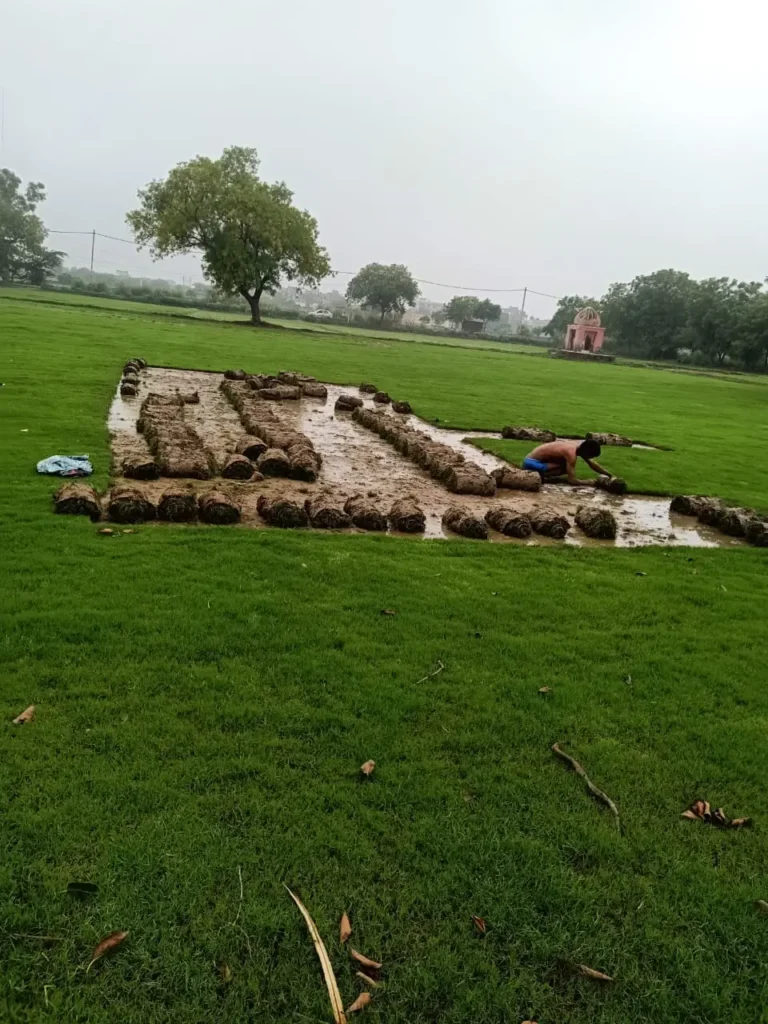
You have two options. Seed or turf (ready-grown grass in rolls or squares). Turf is faster and more reliable, which is why most nurseries recommend it for home lawns.
Pick a spot with full sun. Bermuda grass needs at least 6 hours of direct sunlight. It struggles in heavy shade, so shaded corners are not ideal for it.
Prepare the soil first. Loosen it, remove weeds and stones, and level the area. This step matters more than people think. Uneven soil means an uneven lawn later.
If using turf, lay the rolls tightly against each other with no gaps. Press down firmly so the roots make contact with the soil. Water immediately after laying.
For the first 2 weeks, water daily to help roots establish. After that, 2 to 3 times a week is enough depending on the season. Once established, Bermuda needs far less water than most lawn grasses.
Mow regularly once it is established, about once a week in the growing season. Regular mowing actually helps it grow thicker. If you want to compare it against other natural turf options before deciding, this guide on the best natural grass for Indian lawns can help.
Does Bermuda grass handle heavy foot traffic?
Yes, better than almost any other lawn grass grown in India. This is one of its biggest advantages.
Kids playing, pets running around, regular gatherings on the lawn. Bermuda grass bounces back from all of it. Where other grasses would show bald patches within a season, Bermuda keeps filling itself back in because of how aggressively it spreads.
This is exactly why it is the standard choice for sports grounds. If your lawn sees a lot of activity, Bermuda is usually the smarter pick over more delicate varieties.
What are the benefits of Bermuda grass for your garden?
It recovers from damage fast. Scuffs, bare patches, minor digging by pets- Bermuda fills these back in on its own thanks to its spreading growth habit.
It needs less water. Once the roots are established, Bermuda can go longer between waterings than most lawn grasses without losing its colour.
It tolerates heat well. Indian summers are tough on lawns. Bermuda is one of the few grasses that keeps its green colour through the hottest months instead of turning patchy or brown.
And it is low-cost to maintain long-term. Less water, decent mowing frequency, no special fertiliser schedule needed. Over a few years, this adds up to real savings.
Where can you buy quality Bermuda grass in India?
Bermuda grass quality varies a lot between vendors. Weak turf with thin roots may look fine at delivery but fails to establish properly once laid.
For reliable results, buy from a supplier who grows and supplies at scale. Balaji Nursery has been supplying natural lawn grass across Delhi NCR and North India for over 25 years, with more than 22,000 lawns delivered. Their Bermuda grass comes as fresh-cut turf, ready to lay.
You can order online with home delivery, and their team can also guide you on how much turf you need for your lawn size, plus installation if required. If you are still deciding between varieties, this comparison of the best natural turf options is a good starting point.
So is Bermuda grass worth planting at home?
If you want a lawn that looks good, survives Indian heat and does not demand constant attention, yes. It is one of the most practical choices available.
Now you know everything about Bermuda grass in India. From what it is and why it survives so well, to how to grow it and where to buy it.
If you want a Bermuda lawn at home, Balaji Nursery can help. Shop Bermuda grass today and get fresh turf delivered and installed.
Frequently Asked Questions
Q: How is Bermuda grass different from Korean grass?
Bermuda spreads fast and handles heavy foot traffic and full sun better. Korean grass has a finer, softer blade and suits lawns that get lighter use and some shade.
Q: Does Bermuda grass turn brown in winter?
It can go dormant and lose some green colour in cold North Indian winters, especially in December and January. It greens up again once temperatures rise in spring.
Q: How often should I mow Bermuda grass?
About once a week during the growing season keeps it thick and even. Cutting it too short can weaken the roots, so avoid scalping it.
Q: Can Bermuda grass grow in shade?
Not well. It needs at least 6 hours of direct sun daily. In shaded areas, it thins out, and other grasses tend to invade the patch.
Q: Is Bermuda grass safe for kids and pets?
Yes. It is non-toxic, and its toughness actually makes it one of the better choices for lawns where kids and pets play regularly.
Q: How long does it take for Bermuda grass to fully establish?
With turf, a lawn looks usable within 2 to 3 weeks. Full root establishment and thick coverage typically take 6 to 8 weeks depending on season and care.

- How do you pick the right planter size so your plant actually thrives? - October 10, 2026
- Tulsi Plant Direction as per Vastu: Where to Keep It at Home - October 3, 2026
- Which garden planter is right for your home, balcony or terrace? - October 1, 2026