 by Anjali Mehra Ph.D. in Horticulture (Punjab Agricultural University)
How to Revive Dried Lawn in Punjab Using Urea, DAP & MOP
Introduction
A dried lawn in Punjab is more common than you think. With scorching summers, hot winds (loo), and low humidity, even the healthiest lawns can start turning yellow or brown. The good news? You can revive a dried lawn in Punjab—especially when you use the right combination of fertilisers like Urea, DAP, and MOP.
These three fertilisers provide essential nutrients that restore root strength, boost green growth, and help the grass recover faster from heat stress. Let’s explore a complete, step-by-step strategy to bring your dried lawn back to life.
Understanding Why Lawns Dry in Punjab
Extreme Heat & Temperature Fluctuations
Punjab experiences harsh heat (40°C+), which quickly dries out the grass, especially if the soil isn’t moist.
Hard, Compact Soil
Punjab’s soil becomes extremely hard due to dryness. This restricts oxygen and water movement, suffocating the roots.
Poor Watering Practices
Watering too frequently but too little leads to shallow roots that dry up faster.
Nutrient Deficiency
Grass requires nitrogen, phosphorus, and potassium. Lack of these leads to weak, yellow, and stressed lawns.
Looking for high-quality natural lawn grass in Punjab? Explore our complete guide and premium grass varieties available across Ludhiana, Amritsar, Patiala, Mohali and Chandigarh.
Identifying the Stage of Lawn Damage
Slightly Dry Lawn
Yellow patches
Soil still soft
Grass recovers quickly
Moderately Dry Lawn
Brown, brittle blades
Slow regrowth
Soil becomes compact
Completely Brown Lawn
Looks dead but may still revive
Only roots and crown can confirm life
How to Check if Grass is Alive
Tug Test
Gently pull a handful of grass.
If it comes out easily → roots are dead.
If it holds firmly → grass is still alive.
Check the Root Crown
The base of the grass stem should be cream or white inside. If it’s mushy or black → dead grass.
Role of Fertilisers in Lawn Revival
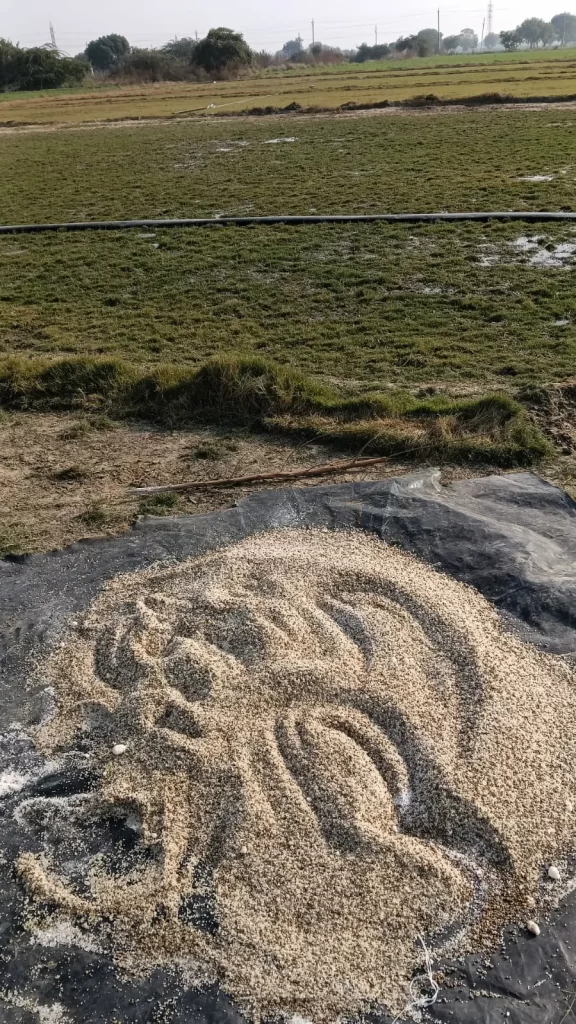
1. What Urea Does (46% Nitrogen)
Promotes fast green growth
Helps revive yellow leaves
Boosts chlorophyll formation
2. What DAP Does (18-46-0)
Deep root development
Strengthens weak or stressed plants
Essential for long-term recovery
3. What MOP Does (0-0-60)
Improves drought tolerance
Boosts disease resistance
Helps the lawn stay green in heat
Why These Three Work Best in Punjab
Punjab lawns face heat, soil compaction, and nutrient loss.
Urea = instant green
DAP = strong roots
MOP = heat endurance
Together, they fix 90% of lawn dryness issues.
If you are planning to install fresh grass in Punjab, don’t miss our detailed page on Natural Lawn Grass in Punjab—covering best varieties, installation process and climate-wise recommendations.
Step-by-Step Lawn Revival Plan
Step 1 — Deep Watering
Water the lawn deeply for 30–40 minutes so moisture reaches 4–6 inches deep.
Do this in early morning.
Step 2 — Aeration for Hard Soil
Use a garden fork to poke 3–4 inch holes across the lawn.
Aeration allows fertilisers and water to reach roots properly.
Step 3 — Apply Urea, DAP & MOP Correctly
Urea Dosage
10–15 grams per square meter
Never apply in afternoon heat
Only apply on moist soil
DAP Dosage
5–7 grams per square meter
Apply only once during revival
MOP Dosage
5–10 grams per square meter
Improves heat resistance
Step 4 — Watering After Fertilisation
Irrigate lightly for 10 minutes to dissolve the fertilisers into the soil.
Step 5 — Monitor New Growth
You should see fresh green shoots within 7–12 days.
Avoid walking on the lawn during recovery.
Best Time to Apply Urea, DAP & MOP in Punjab
Best Seasons
February–March
July–September
October–November
Never Apply Fertiliser In:
Peak summer afternoons
During lawn dehydration
When soil is cracked and dry
Mistakes to Avoid While Reviving Your Lawn
Using too much urea (burns grass)
Not watering enough after fertilization
Mowing grass too short
Mixing urea and DAP together in a single application
Applying fertiliser on dry soil
Additional Tips for Faster Lawn Recovery
Add 1 inch compost to improve soil quality
Add gypsum for hard, clay-heavy Punjab soil
Topdress with river sand for loose aeration
Keep mower height high during recovery
Lawn Types Common in Punjab and Their Revival Needs
Bermuda Grass
Fast recovery with nitrogen (urea). Responds best to DAP for roots.
Doob Grass (Indian Cynodon)
Very strong. Recovers even from dryness with light fertilisation.
Mexican Grass
Sensitive during heat. Requires more MOP for stress tolerance.
How Long Will It Take to Revive a Dried Lawn?
Slightly dry → 3–7 days
Moderately dry → 10–20 days
Completely brown → 25–40 days
Signs of recovery:
Fresh light green leaves
New runners spreading
Soil softening
Conclusion
Reviving a dried lawn in Punjab is completely possible with the right combination of Urea, DAP, and MOP. These fertilisers together rebuild root health, boost green growth, and help the grass survive extreme heat. With consistent watering, aeration, and correct application, your lawn will be lush green again within a few weeks. Follow the steps carefully, avoid common mistakes, and your dried lawn will come back to life naturally.
FAQs
1. Can a fully brown lawn still be revived?
Yes, if the root crown is still alive.
2. How long after applying urea will I see results?
Usually within 5–7 days.
3. Is it safe to mix Urea, DAP, and MOP?
Apply them separately for best results.
4. Should I fertilize during summer in Punjab?
Avoid daytime. Only early morning or late evening.
5. Can overuse of urea kill grass?
Yes. Urea burn is very common. Always measure dosage.
Last Updated on 2 months ago by Anjali Mehra Ph.D. in Horticulture (Punjab Agricultural University)

Her expertise extends to every phase of natural lawn development—from soil preparation and irrigation planning to seasonal maintenance and eco-friendly pest management. Anjali has successfully managed more than 200 natural grass installation projects across Delhi NCR, including golf courses, farmhouse lawns, school campuses, corporate parks, and rooftop gardens.
At Balaji Nursery, she leads project strategy, natural grass selection, and customer education—ensuring that every lawn is designed to thrive under real-world environmental conditions. Her approach emphasizes sustainable landscaping, weed control, and the long-term health of natural turf systems.
Through her blog and advisory services, Anjali simplifies complex lawn care techniques, empowering homeowners, new gardeners, and professional landscapers with practical insights on growing and maintaining lush, resilient lawns using Indian-adapted grass species.
- Why Birds Dig Lawn Grass & How to Stop It Naturally - March 14, 2026
- Hotel Landscaping Grass Projects in J&K - March 10, 2026
- Lawn Grass Installation in Hilly Areas - March 5, 2026