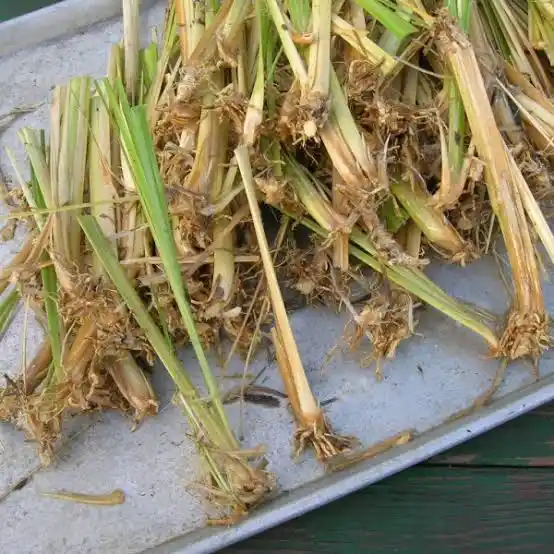
 by Balaji Nursery Editorial Team
How much does vetiver grass cost in India right now?
You want vetiver. Maybe for erosion control. Maybe for essential oil. Maybe for a government project that needs lakhs of slips.
The first question is always the same. What’s the vetiver grass price?
It depends on the variety you pick. India has multiple cultivated types and each one costs differently. Some go for under Re 1 per slip. Others cost Rs 3. The gap exists because different varieties serve different purposes.
This guide gives you actual rates from Balaji Nursery, one of India’s largest vetiver grass suppliers. Real numbers, no guessing.
What are the current vetiver grass rates per slip?
Balaji Nursery carries 9 vetiver varieties. Here’s what each one costs per slip (as of 2026):
Gulabi costs Rs 0.80 per slip. It’s the most affordable option. Named for its rose like scent in the oil, this one is popular in perfumery.
CIM Vetiver comes in at Rs 0.90 per slip. Developed by CIMAP Lucknow, it gives high root biomass and good oil yield. Works for both commercial and environmental projects.
G22, KS1 (Khus Sugandh), Simriddhi and ODV 3 all cost Rs 1 per slip. These are the workhorses. G22 and Simriddhi are great for soil conservation. KS1 is known for its fragrance. ODV 3 handles diverse climates well.
Kesari costs Rs 1.5 per slip. It adapts well to saline and drought prone regions. Good for tough conditions.
Monto is Rs 2 per slip. Originally imported but now widely grown in India. Sterile variety, so it won’t spread where you don’t want it. Preferred for large scale erosion control.
Dharini is the premium pick at Rs 3 per slip. Deep root system makes it ideal for slopes, riverbanks and degraded land.
What decides the vetiver grass price for your project?
Three things.
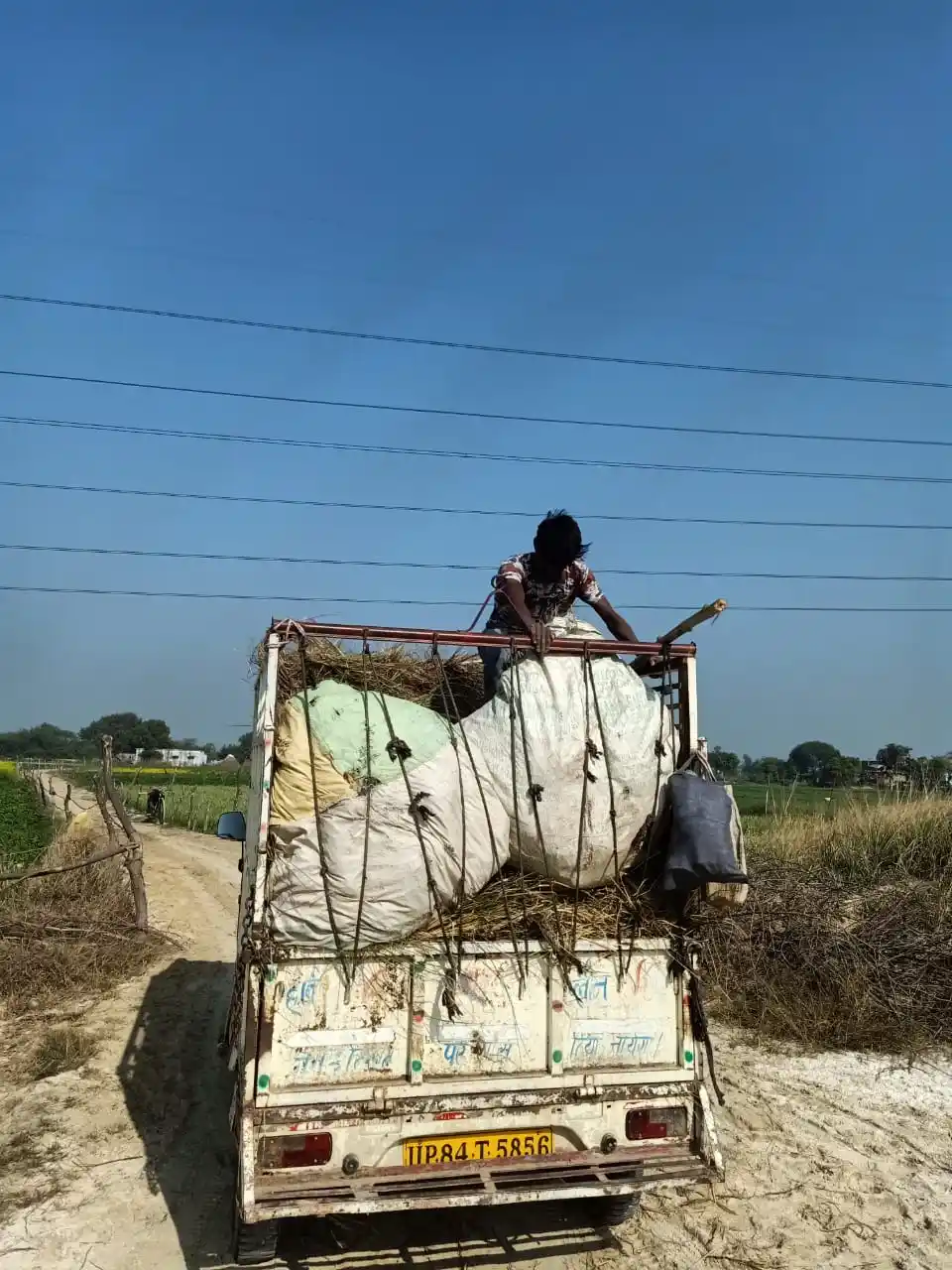
First, the variety. As you saw above, rates range from Rs 0.80 to Rs 3 per slip. If you need vetiver purely for erosion control, G22 or Simriddhi at Rs 1 per slip will do the job. But if you want oil production, KS1 or CIM Vetiver might be worth the slightly different profile. Understanding which grass suits your region’s climate helps narrow the choice.
Second, the quantity. Balaji Nursery’s minimum order is 1,00,000 slips across all varieties. That sounds like a lot, but for a proper hedgerow project covering a few hundred metres, you’ll hit that number easily. Bulk pricing keeps costs low.
Third, delivery distance. Balaji Nursery delivers within 1 to 3 days across India. Freshness matters because vetiver slips lose viability if they sit too long after harvesting. Quick delivery means better survival rate after planting.
How many slips do you actually need for your area?
For erosion control hedges, plant 6 to 10 slips per running metre. Space rows 1 to 1.5 metres apart on gentle slopes. For steep slopes, bring rows closer to 50 cm apart.
So a 500 metre hedgerow with rows every metre apart on a 10 metre wide slope needs roughly 30,000 to 50,000 slips. A bigger project (say a 2 km stretch along a riverbank) can need 2 to 3 lakh slips.
For lawn borders or garden use, fewer slips work. But the minimum order still applies. If your project is smaller, consider splitting an order with a neighbour or local group. For garden projects, this guide on installing natural lawn grass step by step can help with the planning.
Is vetiver cheaper than other erosion control methods?
By a lot. Let’s compare.
Stone pitching costs Rs 500 to Rs 1,500 per running metre depending on the terrain. Concrete retaining walls start at Rs 2,000 per metre and go up fast with height.
Vetiver at Rs 1 per slip with 10 slips per metre costs you Rs 10 per metre of hedge. Even with labour and soil prep, you stay well under Rs 100 per metre.
That’s 10 to 20 times cheaper than concrete. And vetiver maintains itself. Concrete cracks. Stone walls shift. Vetiver just grows back. So the long term savings are even bigger than the upfront difference.
Government agencies have caught on to this. Public parks and government green projects across India now budget for vetiver hedges instead of hard structures wherever possible.
Which variety should you pick for your use case?
For soil erosion on slopes and riverbanks, go with G22, Simriddhi or Monto. These have deep roots and uniform growth. They’re bred for holding soil, not for fragrance.
For essential oil production, KS1 (Khus Sugandh) and Gulabi are better picks. KS1 has a distinctive khus aroma. Gulabi has a rose like quality that perfumers value.
For tough conditions (saline soil, drought, degraded land), Kesari and CIM Vetiver handle stress better than most. Dharini also works well on severely degraded slopes.
For large scale government or institutional projects, Monto is often the default choice. It’s sterile (won’t spread beyond where you plant it) and well documented in World Bank funded erosion control studies.
How do you place a bulk order with Balaji Nursery?
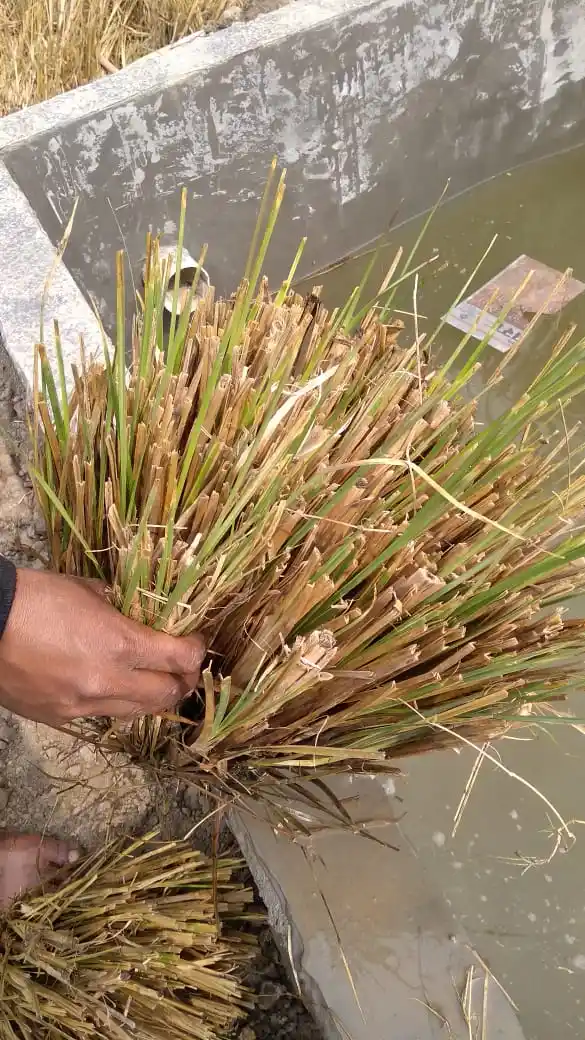
Call 8766234417 or 8588914985. Tell them your variety preference, quantity needed and delivery location.
Balaji Nursery has a production capacity of over 1,000 crore slips. So even if you need 10 lakh or 50 lakh slips for a highway project, they can handle it.
Delivery happens within 1 to 3 days anywhere in India. Slips arrive fresh and ready to plant. Their team can also guide you on which variety fits your soil and climate. If you’re new to natural grass, checking out the benefits of natural lawn grass might help you see the bigger picture.
Can you make money growing vetiver commercially?
Yes. And more people are doing it every year.
Vetiver oil sells for Rs 15,000 to Rs 25,000 per litre depending on quality and purity. One hectare of vetiver can produce 20 to 30 kg of oil per year after the first harvest (usually 18 months from planting).
That’s Rs 3 to Rs 7.5 lakh per hectare per year from oil alone. Add income from selling slips to other farmers and the numbers get better. The input cost is low because vetiver needs almost no fertilizer or irrigation after the first few months.
Tamil Nadu, Karnataka and Rajasthan already have vetiver farming clusters. CIMAP Lucknow offers training programs for farmers who want to start. Balaji Nursery can supply the initial planting material in bulk, so getting started is simpler than most people think.
So what’s the smartest way to buy vetiver grass?
Know your purpose. Pick the right variety. Order in bulk to keep the vetiver grass price as low as possible.
Rates start at Rs 0.80 per slip and go up to Rs 3 depending on the type. Balaji Nursery delivers across India within 1 to 3 days with 9 varieties to choose from.
Call 8766234417 today, get a free quote and start your project with fresh, farm grown slips.
Last Updated on 2 months ago by Balaji Nursery Editorial Team

- How do you pick the right planter size so your plant actually thrives? - October 10, 2026
- Tulsi Plant Direction as per Vastu: Where to Keep It at Home - October 3, 2026
- Which garden planter is right for your home, balcony or terrace? - October 1, 2026