 by Balaji Nursery Editorial Team
What makes vermicompost the best organic soil booster for lawns and gardens?
You’ve heard the advice: use vermicompost. Every gardening article, every nursery, every YouTube video says the same thing.
But what exactly is happening inside this dark, crumbly stuff that makes it better than regular compost, better than cow dung and better than chemical fertilizer for long term soil health?
This guide goes deeper than the usual “it’s good for plants” advice. We’ll cover the science, the practical applications across your entire garden (not just the lawn) and how to tell quality vermicompost from the filler that some vendors sell.
If you’re comparing vermicompost against other options, the organic vs chemical fertilizer comparison breaks down the differences in cost, speed and soil impact.
What actually happens inside a vermicompost pile?
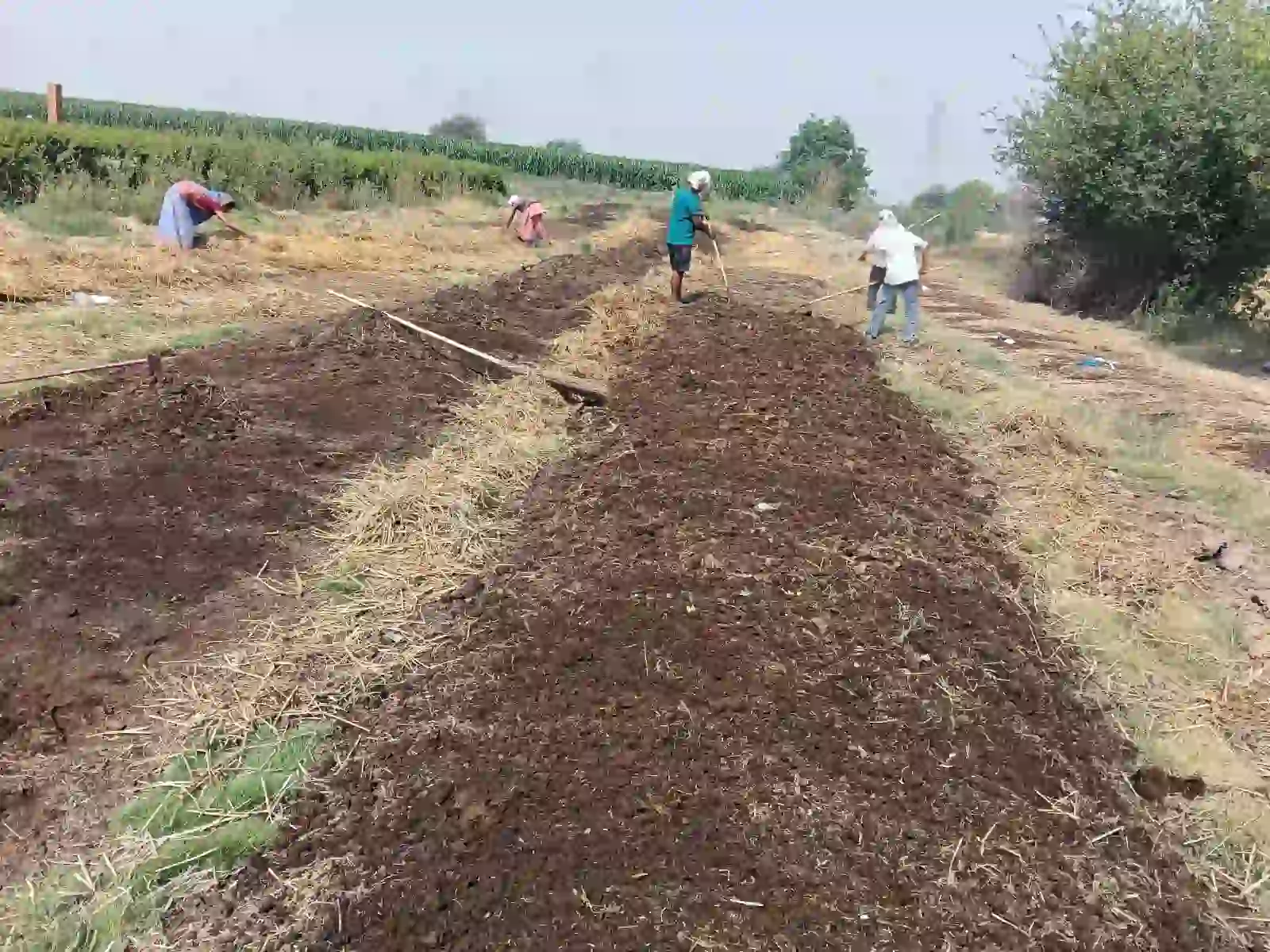
Regular compost is made by bacteria breaking down organic waste. It works, but it’s slow and the end product is decent, not exceptional.
Vermicompost adds a biological engine that regular composting doesn’t have: earthworms. Specifically, Eisenia fetida (red wigglers) or Eudrilus eugeniae (African nightcrawlers).
These worms eat organic waste and pass it through their gut. Inside the worm’s digestive system, the waste gets mixed with enzymes, beneficial bacteria and mucus. What comes out the other end (called castings) is chemically and biologically different from what went in.
The castings contain plant available nutrients in forms that roots can absorb immediately. They contain humic acids that improve soil structure. They contain growth hormones (auxins, cytokinins, gibberellins) that stimulate root and shoot development. And they contain a microbial population density that’s 10 to 20 times higher than the surrounding soil.
No factory can replicate this. No chemical process produces growth hormones, humic acids and living microbial colonies in a single product. That’s what makes vermicompost unique.
How does vermicompost actually improve soil?
It works on three levels simultaneously.
Physical structure. Vermicompost particles are granular and porous. When mixed into clay soil, they create air pockets that improve drainage and root penetration. When mixed into sandy soil, they act like tiny sponges that hold water and prevent nutrients from leaching away. Over 2 to 3 applications, you can feel the difference. The soil crumbles in your hand instead of forming hard clods or running through your fingers.
Chemical nutrition. Vermicompost delivers nitrogen (1.5 to 2.5%), phosphorus (1 to 1.5%), potassium (1 to 1.5%) plus micronutrients like calcium, magnesium, zinc, iron and manganese. These nutrients are chelated (bound to organic molecules) which means roots absorb them more efficiently than the raw mineral forms found in chemical fertilizers. Less waste, more uptake.
Biological activity. This is the biggest advantage. Vermicompost introduces billions of beneficial microorganisms into your soil. These microbes form symbiotic relationships with plant roots (mycorrhiza), break down organic matter into plant food, suppress harmful soil pathogens and produce natural antibiotics that protect roots from disease. A soil rich in microbial life is a self sustaining ecosystem. A sterile soil (which is what years of chemical only treatment creates) depends entirely on external inputs.
Where can you use vermicompost beyond the lawn?
Most people buy vermicompost for their lawn and stop there. But it works across your entire garden.
Flower beds and ornamental borders: Mix 1 kg vermicompost per sq metre into the top 5 cm of soil around your roses, hibiscus, bougainvillea or seasonal flowers. The slow nutrient release supports continuous blooming. Flowers fed with vermicompost tend to produce deeper colours and last longer on the plant.
Vegetable gardens and kitchen gardens: This is where vermicompost really pays off. Mix 2 kg per sq metre into the bed before planting each season. Tomatoes, chillies, brinjal, leafy greens, herbs — they all respond dramatically to vermicompost. Yields increase by 20 to 40% compared to unfed soil. And because there are no chemicals, your vegetables are truly organic.
Potted plants and indoor plants: Mix vermicompost into the potting soil at a 1:4 ratio (one part vermicompost to four parts soil). For existing potted plants, top dress with a 1 cm layer of vermicompost every 2 to 3 months. This replaces the need for liquid fertilizer entirely. Indoor plants like money plant, snake plant and peace lily respond noticeably within 3 to 4 weeks.
Fruit trees and established shrubs: Dig a circular trench around the tree at the drip line (the outer edge of the canopy), 15 cm deep. Fill it with a mix of vermicompost and garden soil (1:1 ratio). Cover and water. Do this once a year before monsoon. Mango, guava, lemon, curry leaf and neem trees all benefit. The nutrients reach the active root zone directly.
Seed starting and nursery trays: A mix of vermicompost, cocopeat and garden soil (1:1:1) makes an excellent seed starting medium. Seeds germinate faster and seedlings develop stronger roots compared to plain soil. Many commercial nurseries use this mix as standard practice.
How do you identify good quality vermicompost?
Not all bags labelled vermicompost contain the same thing. The market has a quality problem. Here’s how to tell the good from the bad.
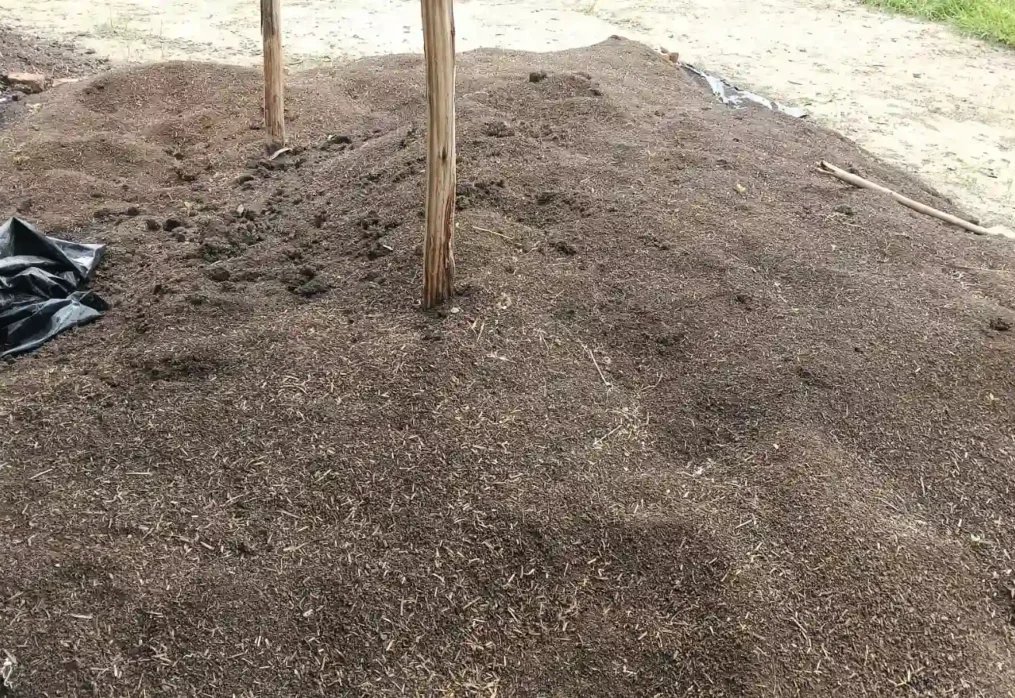
Colour: Good vermicompost is dark brown to black. If it looks light brown or grey, it’s either unfinished (not fully processed by worms) or mixed with soil filler.
Smell: It should smell earthy, like forest floor after rain. If it smells foul, rotten or like ammonia, the composting process was incomplete. Properly finished vermicompost has no unpleasant odour.
Texture: Crumbly and granular, like coffee grounds. It should break apart easily in your hand. If it forms sticky clumps or feels gritty with sand particles, it’s been adulterated.
Moisture: Slightly damp but not wet. Squeeze a handful. If water drips out, it’s too wet (heavier than it should be, which means you’re paying for water weight). If it’s bone dry and dusty, it’s been stored too long.
Debris: No visible sticks, plastic, stones or undigested material. Quality vermicompost is uniform. If you can see chunks of unprocessed waste, the product wasn’t finished properly.
Weed test: Take a small sample, spread it on wet tissue paper and keep it in sunlight for a week. If weeds sprout, the composting temperature wasn’t high enough to kill weed seeds. Good vermicompost should be weed free.
Balaji Nursery’s vermicompost passes all these tests. It’s 100% organic, fully processed, free of filler and debris, and comes in sealed 50 kg bags that maintain proper moisture.
What is vermicompost tea and how do you use it?
Vermicompost tea is a liquid extract made by soaking vermicompost in water. It concentrates the soluble nutrients and microbes into a form you can spray or pour directly onto plants.
How to make it: Fill a cloth bag or old pillowcase with 1 kg of vermicompost. Tie it shut and suspend it in a 10 litre bucket of water. Let it soak for 24 to 48 hours. Stir occasionally. The water will turn dark brown. Remove the bag (use the leftover solid as regular garden mulch). The liquid is your vermicompost tea.
How to use it on lawns: Dilute the tea 1:5 with water (1 part tea, 5 parts water). Pour it over the lawn using a watering can. Apply early morning or late evening to avoid evaporation. Use once a month during the growing season. This is not a replacement for solid vermicompost application but a booster between the main feeds.
How to use it on garden plants: Dilute 1:10 with water and use as a foliar spray. Spray directly on the leaves until they drip. The microbes and nutrients absorb through the leaf surface. Excellent for potted plants, flower beds and vegetable seedlings. Spray every 2 weeks.
Important: Use vermicompost tea within 24 hours of making it. The microbial population starts dying off after that. Fresh tea is active tea. Old tea is just brown water.
Should you make vermicompost at home or buy it?
Home vermicomposting is popular and doable. But it has limits.
What home composting can handle: A household vermicompost bin processes 2 to 5 kg of kitchen waste per week. Over 2 to 3 months, that produces about 10 to 15 kg of finished vermicompost. Enough for a few potted plants and a small flower bed. Not enough for a lawn.
What it can’t handle: A 1,000 sq ft lawn needs 150 to 200 kg of vermicompost per application. You’d need months of home production just for one feed. And lawns need 2 to 3 applications per year. The math doesn’t work for lawn sized requirements.
The practical approach: Make vermicompost at home for your pots and kitchen garden (it’s satisfying and educational, especially for kids). Buy commercial vermicompost in bulk for your lawn and large garden beds. This way you reduce kitchen waste and still get enough volume for your lawn.
For a detailed guide on exact lawn dosages by grass type and soil condition, the organic manure dosage guide covers the numbers.
How do you store vermicompost properly?
Vermicompost is a living product. The microbial colonies inside it need the right conditions to stay alive and active.
Keep it cool and shaded. Direct sunlight heats the bag and kills the microbes. Store in a shaded area, a garage, a storeroom or under a covered space. Never leave bags sitting in the open sun.
Keep it slightly moist. If the bag feels completely dry and dusty when you open it, sprinkle water lightly and mix. Dry vermicompost has dead microbes. The nutrient value remains but you lose the biological advantage.
Don’t seal it airtight. The microbes need oxygen. A sealed plastic bag with no air holes will create anaerobic conditions and the vermicompost will start smelling bad. Jute bags or plastic bags with small holes are ideal.
Use within 3 to 4 months. Vermicompost doesn’t expire like food, but its microbial activity declines over time. Fresh vermicompost (used within a few weeks of production) delivers the best results. After 4 to 6 months of storage, it’s still useful for nutrients but the biological benefit is reduced.
This is why ordering from a supplier with fast delivery matters. Balaji Nursery delivers within a few days of production, so the vermicompost arrives active and ready to use.
Where do you buy quality vermicompost in bulk?
Balaji Nursery supplies 100% organic vermicompost at Rs 960 per 50 kg bag. FYM is available at the same rate. Cow dung manure costs Rs 30 per kg. Minimum order is 500 kg.
Every batch is fully processed, debris free and quality checked. No soil filler. No undigested waste. No weed seeds.
They supply to home gardens, farmhouses, landscaping companies, institutional campuses and government projects. Whether you need 500 kg for a garden or 10 tonnes for a park, the quality stays consistent.
Call 8766234417 or 9354173113. Share your garden layout, lawn size and what you’re growing. Their team will recommend the right quantity and a feeding schedule that covers your entire property, not just the lawn.
Last Updated on 1 month ago by Balaji Nursery Editorial Team

- How do you pick the right planter size so your plant actually thrives? - October 10, 2026
- Tulsi Plant Direction as per Vastu: Where to Keep It at Home - October 3, 2026
- Which garden planter is right for your home, balcony or terrace? - October 1, 2026